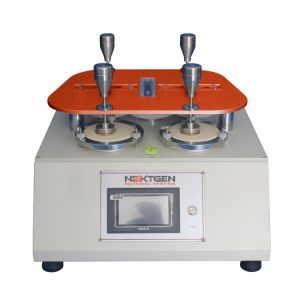
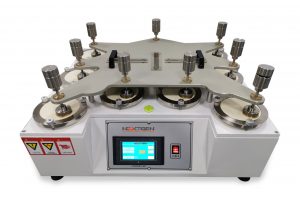
ASTM D4966 and ASTM D4970/D4970M are closely related ASTM textile test methods built around the Martindale tester, but they do not measure the same performance characteristic.
ASTM D4966 is used for abrasion resistance, while ASTM D4970/D4970M is used for pilling resistance and other related surface changes. Together they are common reference points when comparing fabrics or selecting Martindale equipment for textile laboratories. If you need help matching the right configuration to your application, Contact Us.
ASTM D4966 / ASTM D4970/D4970M Martindale Test Methods for Textile Fabrics
These designations refer to two separate ASTM test methods used with a Martindale tester. ASTM D4966 addresses abrasion resistance of textile fabrics, while ASTM D4970/D4970M addresses pilling resistance and related surface appearance change.
Because both methods point to the same general instrument family, they are often considered together during lab planning, equipment selection, and fabric evaluation programs. The exact cited edition should always control the required setup, evaluation, and reporting details.
Quick Definition
Document type: ASTM test methods.
Main focus: D4966 covers abrasion resistance; D4970/D4970M covers pilling resistance and related surface changes.
Primary equipment path: Martindale textile testing systems configured for abrasion work, pilling work, or both.
Practical caution: These methods are useful for comparative textile testing, but they should not be treated as a direct guarantee of real-world service life.
What This Standard Covers
Although the methods share a Martindale platform, they answer different questions about fabric performance.
| Method | What it evaluates | Typical result direction | Common equipment direction |
|---|---|---|---|
| ASTM D4966 | Abrasion resistance of textile fabrics | Relative abrasion performance under defined Martindale conditions | Martindale abrasion configuration |
| ASTM D4970/D4970M | Pilling resistance and other related surface changes | Visual surface rating, commonly on a 5 to 1 scale | Martindale pilling configuration with visual assessment workflow |
For buyers and lab managers, the key point is simple: one method focuses on wear from abrasion, and the other focuses on surface appearance change from pilling-related action.
Why This Standard Matters in Testing
These methods are widely used when a textile program needs comparative data on durability and appearance retention. They help teams screen candidate fabrics, compare constructions or finishes, and align internal quality targets with a recognized Martindale-based workflow.
They also matter because ASTM notes important limitations. ASTM D4966 is not considered satisfactory for acceptance testing of commercial shipments because between-laboratory precision is poor, and ASTM D4970/D4970M is also not recommended for acceptance testing without caution. In practice, that makes edition control, lab-to-lab alignment, and clear reporting especially important.
For procurement and specification work, these methods are best used as controlled comparison tools rather than as a stand-alone prediction of field life.
Common Materials, Product Types, or Applications Covered
ASTM D4966 is generally applicable to textile fabrics including woven, knitted, and nonwoven materials, although thickness can limit suitability because of specimen holder capacity. ASTM D4970/D4970M is commonly used for woven and knitted fabrics and is frequently referenced where surface appearance change matters.
Common material areas: Apparel fabrics, upholstery fabrics, household textiles, contract textiles, industrial fabrics, and other textile products where abrasion resistance or pilling performance is part of product evaluation.
Common application questions: Which fabric holds up better in a comparative abrasion program, and which fabric maintains a cleaner surface appearance under pilling evaluation?
Common Test or Verification Workflow
The workflow usually starts with a clear decision about which property needs to be evaluated. If the need is abrasion resistance, the lab follows ASTM D4966. If the need is pilling and related surface change, the lab follows ASTM D4970/D4970M.
Specimens are prepared and mounted in the Martindale system using the configuration required for the cited method. The instrument then runs the prescribed exposure sequence for abrasion or pilling evaluation, and the lab records results using the reporting approach required by the applicable method and edition.
For ASTM D4970/D4970M, the condition of the fabric before testing may matter because the method allows testing as received or after laundering or dry cleaning when agreed by the interested parties. The pilling result is commonly judged by visual comparison using established standards. For ASTM D4966, the result is used as a relative abrasion indicator under controlled laboratory conditions.
Equipment Commonly Used for This Standard
A Martindale tester is the core equipment family connected to both methods. The exact setup depends on whether the lab is performing abrasion work under ASTM D4966, pilling work under ASTM D4970/D4970M, or both.
Common equipment families: Martindale abrasion and pilling testers, specimen holding accessories, method-specific setup components, and visual assessment materials for pilling evaluation.
Selection focus: Buyers should confirm the number of stations, supported method configurations, accessory compatibility, and the practical workflow for both abrasion and pilling programs before choosing a system.
Quotation caution: A Martindale instrument may support both methods, but the required accessories, consumables, and reporting workflow should be matched to the exact ASTM designation you need to run.
How to Read This Designation or Revision
These are two separate ASTM designations, not one combined ASTM document.
ASTM D4966-22: D4966 is the abrasion resistance method, and the trailing 22 identifies the current ASTM edition year shown in the active listing.
ASTM D4970/D4970M-22: D4970/D4970M is the pilling method, and the slash designation indicates a combined standard format covering separate unit presentations. The trailing 22 identifies the current ASTM edition year shown in the active listing.
Revision sensitivity: If a customer specification, brand manual, or internal quality procedure cites a particular edition, the lab should quote and configure to that exact edition rather than assuming all revisions are interchangeable.
Related Standards, Methods, or Frameworks
These Martindale methods sit alongside other textile abrasion and pilling procedures, so the cited standard matters when comparing data across programs.
Related abrasion references: ASTM D3884, ASTM D3885, ASTM D3886, ASTM D4157, ASTM D4158, and AATCC TM93 are identified by ASTM D4966 as other abrasion test references.
Related pilling references: ASTM D3511/D3511M, ASTM D3512/D3512M, and ASTM D3514 are identified by ASTM D4970/D4970M as other pilling test references.
When a specification simply says “Martindale,” it is important to confirm whether the real need is abrasion resistance, pilling resistance, or both, because the reporting workflow and equipment setup are not the same.
Need a Martindale Tester for ASTM D4966 or D4970?
If you are selecting a Martindale system for abrasion testing, pilling testing, or a dual-purpose textile lab workflow, Request a Quote.