AASHTO T 216 is a standard method of test used to measure one-dimensional consolidation behavior of soils under incrementally applied vertical stress while lateral deformation is restrained. It is commonly used in geotechnical and transportation projects to support settlement and time-rate evaluations for fine-grained soils.
The method is typically run in an oedometer (consolidation) setup and focuses on how a specimen compresses and drains under step loading. If you need help aligning an oedometer configuration, measurement resolution, and control/data options to a specific project requirement, talk with our team.
AASHTO T 216 – Standard Method of Test for One-Dimensional Consolidation Properties of Soils
AASHTO T 216 is used when a project needs consolidation parameters describing both magnitude and rate of consolidation under controlled-stress, incrementally applied loading with axial drainage. The standard provides two alternative approaches for taking time–deformation readings across load increments.
This method is most often associated with undisturbed fine-grained soils, but it may also be applied to compacted soils or soils formed by other processes where one-dimensional consolidation characterization is needed.
Quick definition
Document type: Standard method of test.
Primary purpose: Determine the magnitude and rate of one-dimensional consolidation for laterally restrained soil specimens under incrementally applied controlled-stress loading with axial drainage.
Procedures included: Two test methods (commonly referred to as Method A and Method B) that differ in how time–deformation readings are taken across load increments.
What this standard covers
AASHTO T 216 describes laboratory procedures used to load a soil specimen in steps while monitoring deformation over time as drainage occurs in the vertical direction. The setup restrains lateral strain so that the specimen response is representative of one-dimensional consolidation conditions.
The standard also distinguishes between alternatives for collecting time-deformation data. One approach uses fixed load-increment durations, while the other uses more detailed time-reading schedules to support consolidation-parameter calculations.
Why this standard matters in testing
Consolidation properties influence predicted settlement and the time required for settlement to occur under applied loads. For embankments, roadway widening, approach slabs, and other transportation earthwork, consolidation parameters are often used alongside index testing and strength testing to support design decisions and construction staging.
From a lab perspective, the standard drives practical requirements for load application capability, displacement measurement resolution and stability, and data capture over extended test durations.
Common materials, product types, or applications covered
AASHTO T 216 is most commonly associated with fine-grained soils where consolidation behavior controls settlement performance, including:
- Natural clays and silts from borings (undisturbed sampling)
- Soft to medium-stiff cohesive subgrade soils
- Compacted fine-grained fills where consolidation characterization is specified
- Projects where staged loading, surcharge, or ground improvement decisions depend on consolidation response
Common test or verification workflow
While project requirements vary, a typical consolidation-testing workflow aligned with AASHTO T 216 includes:
- Specimen selection and preparation (often undisturbed fine-grained samples when available)
- Mounting the specimen in a consolidation ring/cell with porous elements to allow vertical drainage
- Incremental loading using controlled-stress load steps, with deformation measurements recorded over time
- Optional unloading/rebound cycle if specified by the requesting agency
- Reduction of the time–deformation and stress–deformation data to obtain consolidation parameters required by the project
Revision sensitivity: Because the requesting agency may specify the magnitude/sequence of load increments and which increments require time readings, test setup and data-collection expectations can be highly project-specific even when the designation is the same.
Equipment commonly used for this standard
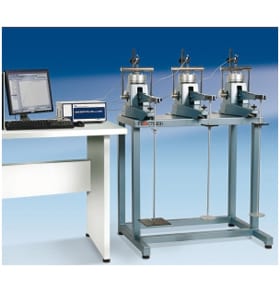
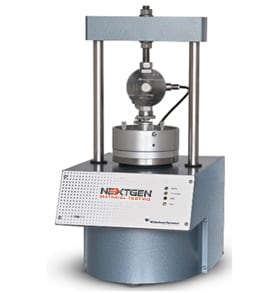
AASHTO T 216 is typically run on an oedometer (consolidation) system. Common equipment elements include:
- Consolidation load frame (deadweight lever system or pneumatic/electromechanical loading frame)
- Consolidation cell and specimen ring (oedometer ring) with porous stones and filter media as required
- Displacement measurement (dial gauge or electronic displacement transducer such as LVDT)
- Data acquisition and software (especially helpful for Method B-style readings and long-duration testing)
- Specimen preparation and measurement tools (trimming tools, balance, calipers, etc.)
- Water reservoir/bath or saturation setup appropriate to the lab’s procedure and specimen condition
Equipment selection is usually driven by load capacity, ability to maintain stable incremental loading over time, displacement resolution, and whether the lab prefers manual readings or automated data capture.
If you are specifying an oedometer system for routine consolidation work or upgrading from manual gauges to automated acquisition, you can request pricing for a configuration matched to your loading and data-collection workflow.
How to read this designation or revision
AASHTO standards are commonly cited with a designation number and an edition/revision indicator. For this method, you may see formatting such as “T 216-07” along with a parenthetical year in some catalogs (for example, “(2020)”).
Because agency specifications may require a particular edition, it is good practice to confirm the exact year/edition referenced in the project documents before finalizing test plan details, reporting templates, or equipment validation checks.
Related standards, methods, or frameworks when useful
AASHTO T 216 is frequently used alongside other geotechnical laboratory tests that support settlement and earthwork design decisions, such as classification/index testing and shear strength testing. Project documents may also reference ASTM counterparts for similar one-dimensional consolidation procedures.
When a specification mixes AASHTO and ASTM citations, the safest approach is to align the lab’s procedure and reporting to the exact cited designation(s) and edition(s), especially for time–deformation reading requirements and load-increment sequencing.
Talk with us about AASHTO T 216 oedometer setups
If you are setting up consolidation testing for a transportation or geotechnical program, we can help map AASHTO T 216 requirements to practical choices like load-frame type, cell size, displacement measurement, and manual vs. automated data collection. To discuss your application, contact our team.