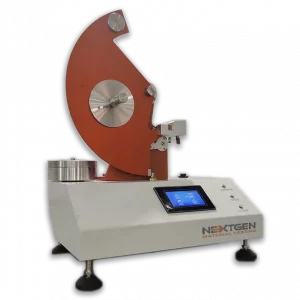
WSP 100.1 is associated with nonwoven tear testing, commonly using a falling-pendulum or Elmendorf-style tearing apparatus.
For nonwoven laboratories, the reference usually points to correct specimen preparation, pendulum range selection, sample conditioning, and reporting aligned with the exact WSP or NWSP citation. If you need help matching the cited requirement to a practical equipment path, contact our team.
WSP 100.1 Nonwoven Tearing Strength Testing
WSP 100.1 is used in nonwoven testing contexts where the tearing strength of a sheet material is evaluated.
The method is commonly connected to pendulum tear testing for nonwovens, but the exact cited WSP or NWSP version should control specimen details and reporting.
Quick Definition
Document type: nonwoven test method reference.
Main focus: tearing strength of nonwoven materials.
Primary equipment path: Elmendorf tear testers, pendulums, specimen cutters, conditioning support, and reporting tools.
What This Standard Covers
WSP 100.1 covers a tear-resistance workflow for nonwoven sheet materials.
The test is useful when a lab needs to compare how nonwoven materials resist tear propagation under controlled pendulum conditions.
Why This Standard Matters in Testing
Tear resistance is important for wipes, hygiene materials, medical nonwovens, filtration media, packaging, and other converted nonwoven products.
For equipment planning, the standard can drive pendulum capacity, specimen preparation tooling, conditioning requirements, and reporting workflow.
Common Materials, Product Types, or Applications Covered
The method is focused on nonwoven sheet materials and converted nonwoven products.
Common material or product areas: nonwoven fabrics, wipes, hygiene materials, medical nonwovens, filtration media, industrial nonwovens, and converted sheet samples.
Common application questions: whether a nonwoven material has the tear resistance required for product development, quality control, or customer specification work.
Common Test or Verification Workflow
A typical workflow cuts specimens, conditions them if required, mounts the specimen in the tearing tester, initiates the tear, and records the measured tearing result.
Pendulum capacity and specimen preparation should be matched to the expected tear range and the exact cited method.
Workflow focus: specimen cutting, conditioning, pendulum tear testing, result calculation, and reporting.
Equipment Commonly Used for This Standard
WSP 100.1 work commonly uses a dedicated Elmendorf-style tear tester rather than a universal tensile machine.
Common equipment families: falling-pendulum tear testers, Elmendorf pendulums, specimen cutting dies, clamps, conditioning equipment, thickness or mass tools when required, and reporting software.
Selection focus: confirm material basis weight, expected tear range, specimen geometry, pendulum capacity, conditioning requirement, and exact WSP or NWSP citation. If you are comparing equipment configurations for this workflow, request a quote.
How to Read This Designation or Revision
WSP 100.1 is a WSP-style test designation. In newer contexts, related nonwoven procedures may be cited as NWSP references.
The exact cited document should control the apparatus, specimen preparation, and result reporting.
Related Standards, Methods, or Frameworks
NWSP tear procedures, ISO 9073-related nonwoven methods, ASTM textile tear methods, and paper tear methods may appear in related contexts, but method details should be checked before comparing results.
Need WSP 100.1 Tear Testing Equipment?
If you are selecting a pendulum tear tester for nonwoven materials, request a quote.