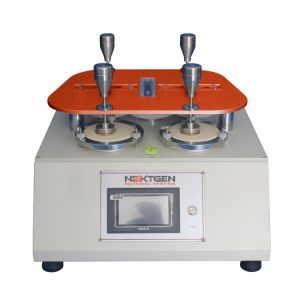
SATRA TM31 is a SATRA test method for evaluating the abrasion resistance of flexible sheet materials using a Martindale abrasion tester. It is commonly used to compare how materials perform under controlled rubbing in both dry and wet conditions.
This method is widely applied to fabrics, coated fabrics, and leathers used in footwear uppers, linings, and related components—especially when buyers need a repeatable way to screen materials, verify supplier consistency, or support product specifications. If you need help matching the right edition and test severity to a purchase specification, talk with our team.
SATRA TM31 — Abrasion resistance (Martindale method)
SATRA TM31 is a test method focused on material durability under abrasion. The method uses a defined rubbing motion (Martindale/Lissajous movement) with controlled loading, then evaluates specimen damage after a specified number of cycles.
Because product specifications can set different loads, cycle counts, and assessment criteria, TM31 is often used as a controlled “pass/fail” check or a comparative screening tool between candidate materials.
Quick definition
Document type: Test method.
Purpose: Measure resistance of flexible sheet materials to dry and/or wet abrasion using a Martindale abrasion platform, then assess the resulting wear or damage after a defined number of cycles.
Typical output: A durability assessment at the specified cycles (and conditions) used by the relevant product or customer specification.
What This Standard Covers
SATRA TM31 covers abrasion testing where circular specimens are rubbed against a standard abradant under a controlled contact force. Testing may be performed with the abradant in a dry state, after wetting, or both—depending on the requirement you are working to.
The method is designed for flexible sheet materials and is particularly relevant where surface wear, finish breakdown, coating damage, fibre disruption, or visible deterioration can affect product performance or appearance.
Why This Standard Matters in Testing
Abrasion resistance is a common cause of field complaints for consumer and industrial products: scuffing, finish loss, and premature wear can show up quickly in use even when other mechanical properties look acceptable on paper.
TM31 provides a repeatable way to compare incoming lots, qualify alternate materials, and set practical acceptance criteria. It is also a useful method when you need both dry and wet abrasion performance, since moisture can change friction and accelerate surface breakdown for some constructions.
Common Materials, Product Types, or Applications Covered
SATRA TM31 is mainly applicable to fabrics, coated fabrics, and leathers, but it can be used with other flexible sheet materials when a Martindale-style abrasion approach is appropriate.
Common applications: Footwear uppers and linings (leather and synthetic), coated textiles used for durability layers, and other sheet materials where surface wear is a key performance attribute.
Common Test or Verification Workflow
TM31 is typically used as part of a material qualification or ongoing quality program rather than a one-off investigation.
Common workflows: (1) Define the required condition (dry, wet, or both) and the severity (load and number of cycles) from a customer specification or internal standard, (2) run abrasion exposure on representative specimens, (3) assess wear/damage at the required endpoint, and (4) report results in the format required by the controlling specification.
Practical note: The chosen abradant, pressure/loading, and cycle endpoint drive how “severe” the result is. For purchasing decisions, it is important that lab-to-lab comparisons use the same configuration and assessment criteria.
Equipment Commonly Used for This Standard
TM31 points most directly to a Martindale abrasion testing setup, plus the correct consumables and specimen-holding hardware to maintain repeatability.
Common equipment: Martindale abrasion tester (with Lissajous motion), specimen holders/clamping rings, calibrated loading weights, and the specified standard abradant materials (including options for dry and wet preparation).
Common lab needs: A controlled environment for conditioning and consistent visual assessment practices for end-point evaluation (especially where acceptance is based on appearance or surface damage grading).
If you are selecting a Martindale platform or need the right holders/loads for your material thickness range, you can request a detailed quote for a configuration aligned to your TM31 workflow.
How to Read This Designation or Revision
Designation format: “SATRA TM31” identifies the test method number within SATRA’s TM (test method) series.
Revision citation: The method is commonly cited with a year (for example, “SATRA TM31:2021”). For procurement, documentation, and inter-lab comparability, use the exact cited edition required by the product specification (including the year) and align the test severity settings to that requirement.
Related Standards, Methods, or Frameworks
Martindale abrasion testing is also widely referenced in broader textile and material durability programs. Depending on your industry and customer requirement, you may see comparable Martindale-based abrasion approaches referenced alongside SATRA TM31.
Related context: Some specifications pair abrasion exposure with colour/appearance evaluation tools and companion material characterization tests (such as mass per unit area), especially when comparing constructions or controlling supplier variation.
Get help with SATRA TM31 equipment and setup
If you need to align a Martindale system, consumables, and reporting to the specific SATRA TM31 edition and customer acceptance criteria you are working to, contact our team with your material type, dry/wet requirement, and target cycle endpoints.