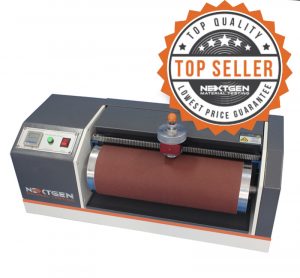
SATRA TM 174 is a SATRA test method for measuring the abrasion resistance of polymer-based materials using a rotating drum abrasion setup. It is widely used for footwear soling compounds and for material cut from finished soles where volume loss under controlled abrasive contact is a key durability indicator.
If you need help matching your material type, specimen format, or reporting requirement to the correct TM 174 edition, you can talk with our team before you lock in equipment or fixtures.
SATRA TM 174 Abrasion resistance – rotating drum method
SATRA TM 174 describes a rotating-drum abrasion approach intended to quantify abrasion resistance by measuring volume loss from a test specimen subjected to a defined abrasive surface under a constant force.
The method is mainly used for polymeric footwear soling materials (or suitable material cut from finished soles), and it can also be applied to other polymer-based sheet materials where rotating-drum abrasion is an appropriate wear simulation.
Quick Definition
What it is: A rotating-drum abrasion resistance test method.
What it measures: Volume loss of a circular specimen after controlled abrasion, typically calculated from mass loss and density or from displacement volume measurement.
Typical use: Comparing soling-material wear performance for product development, supplier approval, and quality control.
What This Standard Covers
TM 174 establishes the basic test concept and outcome reporting for abrasion on a rotating, abrasive-covered cylinder. A circular specimen is loaded against the drum under a specified force and traverses along the drum to create a repeatable abrasion path.
The method allows abrasion loss to be determined by either (1) converting mass loss to volume loss using density, or (2) determining volume change by displacement. It also includes a check on abrasive severity using a reference material to help keep results comparable over time.
Why This Standard Matters in Testing
For soling compounds and other wear-critical polymer materials, abrasion resistance is often a go/no-go property and a key differentiator between formulations. TM 174 provides a standardized way to quantify wear loss so results can be trended across material lots, suppliers, or product generations.
Because abrasion results are sensitive to abrasive media condition, reference materials, specimen preparation, and density/volume measurement choices, TM 174 is most useful when the lab aligns equipment configuration and reporting to the exact edition cited in the customer or internal requirement.
Common Materials, Product Types, or Applications Covered
TM 174 is most commonly associated with footwear bottom-unit durability and wear performance comparisons.
Common materials: Polymeric soling materials (for example, rubber and thermoplastic or crosslinked soling compounds) and other polymer-based sheet materials where rotating-drum abrasion is relevant.
Common specimen sources: Lab-prepared sheet stock, molded plaques, or material cut from finished soles when permitted by the method and the cited requirement.
Common Test or Verification Workflow
TM 174 is typically run as a comparative durability check alongside other physical-property tests used for soling qualification.
Common workflow: (1) select the cited TM 174 edition and any customer-specific conditions, (2) prepare circular specimens from the specified material location, (3) run rotating-drum abrasion for the required exposure, (4) calculate volume loss using the selected approach (mass-loss-plus-density or displacement volume), and (5) verify abrasive severity using the required reference material checks.
Reporting focus: Volume loss and the essential test conditions needed to reproduce results (including the chosen volume-loss determination approach).
Equipment Commonly Used for This Standard
TM 174 points most directly to a rotating-drum abrasion tester configuration and the supporting metrology needed to determine volume loss reliably.
Common equipment: Rotating drum (DIN-style) abrasion tester with controlled load and specimen traverse, standard abrasive media/cloth, reference material for abrasive-severity checks, precision balance for mass-loss measurement, and density or volume-displacement tools when volume loss is calculated from mass loss or measured by displacement.
Practical selection note: Many rotating-drum abrasion platforms are designed to support multiple rotating-drum abrasion methods; when quoting a system, the key is confirming the TM 174-specific abrasive media, reference materials, fixtures, and calculation/reporting pathway expected by the cited edition.
How to Read This Designation or Revision
Designation meaning: “TM” indicates a SATRA Test Method, and “174” is the method number identifying the rotating-drum abrasion procedure.
Revision sensitivity: TM 174 has been issued and revised over time (including a revision issued in November 2016). Purchasing specs and lab scopes may cite a year (for example, TM 174:1994 or TM 174:2016) or may cite TM 174 without a year; equipment setup and reporting expectations can depend on the exact cited issue.
Related Standards, Methods, or Frameworks
TM 174 commonly relies on density/volume determination support when volume loss is calculated from mass loss. In SATRA workflows, related references may be specified for density measurement depending on specimen form (material pieces versus complete sole units).
Commonly referenced SATRA methods: SATRA TM134 (density by volume displacement), SATRA TM138 (density of complete sole units), and SATRA TM68 (density of rubber in sheet form, including cellular rubber).
Get a TM 174-Ready Abrasion Test Setup
If you are choosing a rotating-drum abrasion tester configuration (and the matching abrasive media, reference materials, and measurement accessories) for TM 174, you can request a detailed quote matched to your lab’s throughput and reporting needs.