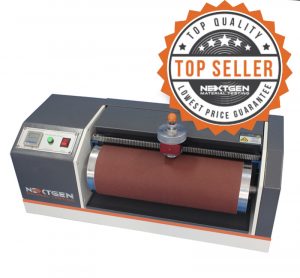
SATRA TM 174 is a SATRA test method for determining the abrasion resistance of materials using a rotating drum abrasion setup and reporting volume loss.
It is commonly used for polymeric footwear soling materials and for material cut from finished soles when abrasion performance is part of product development, supplier approval, or quality control. If you need help aligning TM 174 to your specific sole material and reporting requirements, talk with our team.
SATRA TM 174 — Abrasion resistance (rotating drum method)
SATRA TM 174 is a test method focused on measuring how a material resists wear when rubbed against a standard abrasive on a rotating cylinder. The method is primarily associated with footwear soling compounds, but it can also be applied to other polymer-based sheet materials where a rotating-drum abrasion result is required.
Quick definition
What it is: A rotating drum abrasion test method that determines abrasion resistance by calculating the specimen’s volume loss after controlled abrasion against a standard abrasive cloth.
What you get: A volume-loss abrasion result that can be used for material comparison, incoming inspection, and specification compliance decisions.
What this standard covers
TM 174 is intended to determine the abrasion resistance of a material under a defined abrasive contact condition. A circular specimen is loaded against a rotating cylinder covered with a standard abrasive cloth, while the specimen traverses along the cylinder to create a helical wear track.
The method determines volume loss using either (a) mass loss combined with density, or (b) displacement volume measurement. The method also includes verification of abrasive severity using a reference material.
Why this standard matters in testing
For outsole and soling compound selection, abrasion is often a make-or-break durability attribute. TM 174 provides a practical way to compare formulations, suppliers, process changes, and material lots using a repeatable abrasive mechanism and a standard abrasive cloth.
Because abrasion results can be sensitive to specimen preparation, density determination approach, and abrasive condition, TM 174 is typically used as part of a controlled lab workflow with defined acceptance criteria set by the product specification or buyer requirements.
Common materials, product types, or applications covered
TM 174 is mainly applicable to polymeric footwear soling materials and suitable material cut from finished soles. It can also be applied to other polymer-based sheet materials when a rotating-drum abrasion result is requested.
Typical use cases: Outsole compound screening, supplier qualification of soling sheets, comparative testing of rubber/thermoplastic/PU-type soling materials, and durability benchmarking across product lines.
Common test or verification workflow
TM 174 is commonly run as a comparative abrasion evaluation, where materials are ranked by volume loss under the defined drum abrasion exposure.
Common workflow steps: Prepare circular specimens from sheet or finished sole material, abrade on the rotating drum under constant force while traversing along the abrasive surface, determine volume loss using the chosen approach (mass loss/density or displacement volume), and verify abrasive severity using the specified reference check.
Reporting focus: Volume loss and any required supporting information tied to the chosen volume-loss calculation route.
Equipment commonly used for this standard
TM 174 points to a rotating drum abrasion tester configuration that applies a controlled force to a circular specimen against a rotating cylinder wrapped with standard abrasive cloth, while moving the specimen along the drum to create a helical wear path.
Common equipment: Rotating drum abrasion tester, standard abrasive cloth/consumables, specimen cutting tools (for circular specimens), an analytical balance (for mass-loss determination), and equipment to determine density or displacement volume depending on the selected calculation method.
Practical selection note: For quoting the right system, the most important decisions are typically the abrasion tester configuration and the supporting measurement path for volume loss (mass-loss with density versus displacement volume), plus the consumables workflow for abrasive and reference verification.
If you are selecting a rotating drum abrasion system and want to match the configuration to your material type and reporting approach, you can request a detailed quote based on your lab’s throughput and documentation needs.
How to read this designation or revision
Designation: “SATRA TM 174” identifies the SATRA test method number for abrasion resistance using the rotating drum method.
Revision awareness: TM 174 has been issued and revised over time (including a revision published in November 2016). When abrasion results are used for compliance decisions, always align the test setup and reporting to the exact edition (and any buyer-specific deviations) cited in the purchase specification.
Related standards, methods, or frameworks when useful
TM 174 includes volume-loss determination routes that may rely on density or displacement measurements. In practice, labs may reference complementary SATRA procedures for density determination when using the mass-loss/density route.
Common related SATRA methods (referenced by TM 174): SATRA TM134 (density by volume displacement), SATRA TM138 (density of complete sole units), and SATRA TM68 (density of rubber including cellular rubber in sheet form).
Discuss TM 174 setup and get the right system quoted
If you need help selecting a rotating drum abrasion tester, choosing the most practical volume-loss measurement route for your material, or aligning your setup to a customer’s cited edition, contact our team and share your material type and reporting requirements.