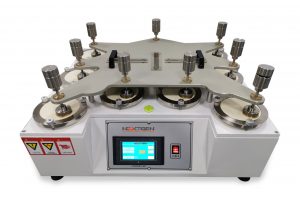
M&S 17/19/19C is commonly cited as a retailer requirement used with Martindale abrasion and/or pilling evaluation for textile materials and related components.
Because M&S documents are typically controlled and edition-sensitive, labs and suppliers should confirm the exact referenced clause/issue before setting up fixtures, loads, and rating criteria. If you need help matching your internal spec callout to an instrument configuration, talk with our team.
M&S 17/19/19C
M&S 17/19/19C is a proprietary designation that is widely referenced in textile abrasion and pilling test workflows that use the Martindale platform (multi-station rubbing motion with controlled pressure and cycle counts).
In practice, it is often used in supplier qualification and ongoing quality control to demonstrate surface durability and appearance retention for fabrics and similar flexible materials.
Quick Definition
Document type: Retailer requirement / in-house method reference (proprietary designation).
Primary intent: Define how abrasion resistance and/or pilling performance is evaluated on a Martindale abrasion & pilling tester for specified materials.
What buyers should expect: The controlling details are typically the cited issue/edition and the linked parameters (loads, rub media, cycles, and rating rules).
What This Standard Covers
M&S 17/19/19C is generally used to control a Martindale-based rubbing test setup and the acceptance/rating criteria for the tested surface.
Typical controlled elements include: test pressure (weights), rubbing/cycle count, selection of abradant or rubbing fabric, specimen mounting/backing, and the pass/fail or grading approach (for abrasion damage and/or pilling appearance).
Why This Standard Matters in Testing
Martindale results can change significantly with small differences in mass loading, abradant selection, specimen backing, and how appearance is rated. A proprietary requirement like M&S 17/19/19C is often used to remove ambiguity by tying performance claims to a specific set of conditions.
For procurement and QA/QC teams, the key practical point is traceability: align the report to the exact M&S callout (including issue/edition) so results are comparable across suppliers and over time.
Common Materials, Product Types, or Applications Covered
This designation is most commonly encountered for flexible textile constructions where surface durability and appearance are critical.
- Woven and knitted fabrics (apparel and uniform-type constructions)
- Upholstery and contract/interior textiles (where applicable to the buyer’s requirement)
- Fabric laminates and linings (when specified)
Note: Material applicability should be taken from the exact purchase specification or technical pack that cites M&S 17/19/19C.
Common Test or Verification Workflow
Most labs treat M&S 17/19/19C as a controlled Martindale verification step within product approval and routine QC.
Common workflow: (1) condition specimens as required by the controlling document, (2) mount specimens with the specified backing/felt/foam (if required), (3) run Martindale rubbing for the specified cycle intervals, (4) stop at defined checkpoints for inspection, (5) grade damage or pilling appearance per the requirement, and (6) report the exact parameters used (load, cycles, abradant, specimen build-up, and rating outcome).
Equipment Commonly Used for This Standard
M&S 17/19/19C is typically executed on Martindale abrasion and pilling equipment with accessories matched to the cited setup requirements.
- Martindale abrasion & pilling tester (multi-station), with programmable cycle counting and controlled load application
- Specimen holders and tables appropriate to the specimen size and method configuration
- Standard abradant media and backing materials (as specified), plus cutting dies/templates
- Masses/weights and verification tools for load confirmation
- Inspection/rating tools for surface assessment (often visual grading under controlled lighting)
If you are selecting a Martindale system or need to align accessories (holders, weights, and consumables) to your internal M&S callout, you can request a detailed quote for a complete configuration.
How to Read This Designation or Revision
M&S 17/19/19C is typically referenced as a proprietary designation within a brand/retailer quality system. The numbers/letters can reflect internal method numbering and/or variant conditions, and the controlling details may change by issue date or revision level.
Practical requirement: When requesting testing or comparing reports, include the full callout exactly as written in the customer requirement (including any suffixes and the cited issue/edition) and ensure the lab report lists the key test parameters used.
Related Standards, Methods, or Frameworks when useful
Martindale abrasion and pilling workflows are often discussed alongside widely used international methods that also use Martindale-type motion and rating concepts. A customer requirement may reference one of these methods in addition to (or instead of) an M&S designation.
- ISO-based Martindale abrasion series (commonly cited for abrasion evaluation)
- ISO-based Martindale pilling methods (commonly cited for pilling assessment)
- ASTM abrasion/pilling methods that labs may use for comparative reporting when required
Where multiple methods are listed in a specification, equipment setup and consumables should be selected to support the strictest combination of loads, holders, and reporting needs.
Get Help Matching M&S 17/19/19C to the Right Setup
If you want to confirm whether your requirement is abrasion-focused, pilling-focused, or a combined evaluation—and what that implies for fixtures, loads, and consumables—contact our team with the exact clause/edition you’ve been asked to meet.