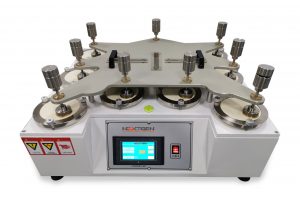
JIS L 1096 is a Japanese Industrial Standard that compiles test methods used to evaluate key performance and quality characteristics of woven and knitted fabrics.
Because JIS L 1096 includes multiple method options for different properties and fabric types, the right setup depends on the exact clause/method referenced in your customer spec. If you need help matching your requirement to the correct test configuration, talk with our team.
JIS L 1096 — Testing methods for woven and knitted fabrics
JIS L 1096 is used throughout textile supply chains to define consistent laboratory procedures for measuring fabric properties that impact product performance, durability, and end-use suitability.
This standard is commonly referenced for apparel, interior textiles, and general textile material evaluations where buyers need standardized physical testing rather than a brand-specific in-house method.
Quick Definition
Document type: Test methods (a multi-method standard covering multiple fabric properties).
What it does: Provides standardized procedures for testing woven and knitted fabrics across a range of physical and functional characteristics.
Key practical point: Equipment and fixtures are method-dependent—always identify the exact property and method (and the cited edition) before selecting tooling.
What This Standard Covers
JIS L 1096 covers laboratory test procedures used to characterize woven and knitted fabrics. Depending on the referenced section, it may involve strength and deformation behavior, durability-related evaluations, dimensional change assessments, and other fabric performance measurements.
Because it is a compiled methods standard, the scope is not limited to one bench test. Instead, it serves as a toolbox of recognized procedures that laboratories select from based on product requirements or customer specifications.
Why This Standard Matters in Testing
JIS L 1096 helps labs and manufacturers reduce ambiguity when reporting fabric results to brands, importers, and downstream converters. A clear JIS method reference supports repeatable testing, improves comparability between suppliers, and helps QC teams set acceptance criteria tied to a known procedure.
For procurement and QA/QC, the biggest risk is misalignment: two labs can report different numbers for the “same property” if they used different method variants, specimen directions, conditioning, or fixtures.
Common Materials, Product Types, or Applications Covered
JIS L 1096 is typically applied to:
-
Woven fabrics used for apparel, uniforms, workwear, and household textiles
-
Knitted fabrics used for cut-and-sew garments, performance wear, and stretch constructions
-
Fabric submissions for supplier qualification, incoming inspection, and production-lot release testing
When a requirement is written against “fabric” performance (not the finished garment), JIS L 1096 is a common reference point for the test method definition.
Common Test or Verification Workflow
Most JIS L 1096 workflows follow a practical pattern: identify the fabric type and directionality to be tested, select the correct property and method variant, prepare and condition specimens, run the test on the specified apparatus, and report results using the required units and test details.
Common workflow needs: Correct specimen orientation (warp/weft or wale/course), consistent gripping or clamping approach, controlled rate/pressure settings where applicable, and documentation of the selected method variant and test conditions.
Revision sensitivity: Setup and reporting can change with the cited edition and with the selected method option inside the standard, so purchase specs and lab reports should cite the full designation and method.
Equipment Commonly Used for This Standard
Equipment selection for JIS L 1096 depends on which property is being tested. Many labs build a fabric-testing capability around a core mechanical test frame plus dedicated textile instruments for property-specific methods.
Common equipment families (method-dependent): Universal testing machines (UTMs) with fabric grips/clamps; tear testing fixtures or dedicated tear testers; bursting strength testers; abrasion testers; air permeability testers; thickness and mass-per-unit-area measurement tools; and dimensional change (shrinkage) evaluation setups that may include laundering/drying equipment and measuring templates.
If you are comparing load capacities, grip styles, or fixture packages for a JIS L 1096 method in your spec, you can request a detailed quote for an equipment configuration matched to your fabric type and throughput.
How to Read This Designation or Revision
JIS standards are commonly cited using the format “JIS L 1096:YYYY,” where “YYYY” indicates the year of the cited edition.
Because JIS L 1096 contains multiple methods within the same document, requirements are often most actionable when they include both the JIS designation and the specific property/method reference (for example, the relevant test name and method option). When an amendment/supplement is cited, it should be matched as well to avoid method mismatches.
Related Standards, Methods, or Frameworks
Some JIS L 1096 methods align with or reference internationally used textile methods for specific properties. When a customer specification lists both a JIS method and an ISO method for the same property, confirm whether the requirement expects strict compliance to one document or allows an equivalent procedure.
For procurement and lab planning, the safest approach is to treat the cited standard (and its method option) as the controlling requirement unless the buyer explicitly states an accepted alternative.
Need help matching JIS L 1096 to the right test setup?
If you share the exact JIS L 1096 edition and the property/method your customer calls out, we can help you map it to the appropriate instrument type, fixtures, and operating range so your lab runs the intended procedure with the right tooling. Start by contacting our team with your fabric description and the clause/method reference.