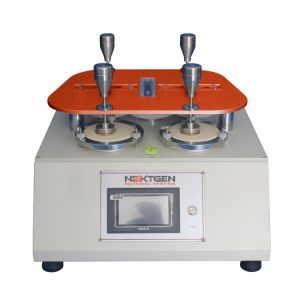
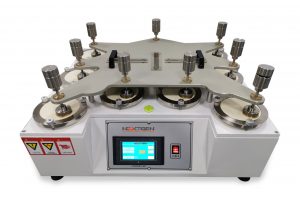
IWSTM 112/196 is a legacy pair of wool-textile test-method designations commonly cited for Martindale-based fabric performance checks, especially abrasion resistance (wear) and pilling (surface fuzz balling) evaluation.
If you need help mapping a customer requirement that calls out “IWSTM 112/196” to the right Martindale configuration, specimen holders, and grading setup, talk with our team.
IWSTM 112/196 — International Wool Secretariat test methods (legacy designations)
In lab and procurement language, “IWSTM 112/196” is typically used as a combined callout for Martindale abrasion and Martindale pilling evaluation of textile fabrics, including wool and wool-blend constructions. These designations are frequently encountered in older specifications, retailer requirements, and equipment documentation.
Because IWSTM references are often paired with ISO, ASTM, and BS Martindale standards, the practical focus for most labs is ensuring the machine setup, accessories, and visual grading tools match the requirement that was actually cited on the purchase order or test plan.
Quick Definition
What it is: A legacy wool-textile test-method callout commonly associated with Martindale abrasion (IWSTM 112) and Martindale pilling / surface appearance change (IWSTM 196).
What it’s used for: Comparing fabric durability and surface resistance to wear and pilling under controlled rubbing cycles, using defined loads and abradants, with visual rating and/or end-point criteria.
Where it shows up: Customer specifications, older internal lab methods, and Martindale instrument conformity lists in the textile and apparel supply chain.
What This Standard Covers
IWSTM 112/196 is most commonly used to specify Martindale-style rubbing tests where textile specimens are mounted in holders and rubbed against an abrasive medium using the characteristic Lissajous motion of a Martindale platform. The results are typically expressed as a durability outcome (for abrasion) and a surface appearance rating (for pilling).
In practice, labs use the cited IWSTM numbers to align the correct specimen mounting approach, applied loads, abrasive media, cycle counts, and assessment approach (appearance change, breakdown, mass loss, or pilling grade) required by the calling specification.
Why This Standard Matters in Testing
Martindale abrasion and pilling results are frequently used for go/no-go decisions in material qualification, incoming inspection, and comparative benchmarking across fabric constructions and finishes. When the requirement is written as IWSTM 112/196, it usually indicates the buyer expects Martindale-based results rather than a different abrasion or pilling mechanism.
For equipment selection and outsourcing decisions, the key risk is mismatching the test configuration or grading method—especially when a contract references a legacy IWSTM method while the lab normally runs ISO or ASTM Martindale variants.
Common Materials, Product Types, or Applications Covered
These IWSTM designations are most often associated with fabric performance evaluation, including:
- Wool and wool-blend woven fabrics
- Knits and other apparel textiles where pilling is a customer-facing quality issue
- Upholstery and furnishing textiles where surface wear and appearance retention matter
- Some footwear-related textiles and linings when Martindale accessories are used
Actual applicability depends on the calling requirement and any companion references (for example, ISO/ASTM/BS Martindale standards cited alongside the IWSTM callout).
Common Test or Verification Workflow
Most IWSTM 112/196 workflows follow the typical Martindale sequence:
- Condition specimens and prepare them to the required size and mounting approach
- Select the correct abrasive media and backing materials for the requirement
- Run the Martindale motion for the specified number of rub cycles (or to an end point)
- Evaluate abrasion by a defined outcome such as breakdown, mass loss, or appearance change (as required)
- Evaluate pilling by visual grading against a defined rating scale, often using controlled lighting and reference photographs
Because “IWSTM 112/196” is often used as a combined callout, many labs treat it as a paired abrasion + pilling verification activity and report both outcomes for the same material family.
Equipment Commonly Used for This Standard
IWSTM 112/196 most commonly points to a Martindale abrasion and pilling tester configured with the correct stations, holders, and loading system for the materials being tested.
Common equipment: Martindale abrasion & pilling tester (multi-station), specimen cutters and mounting rings/holders, specified abradant fabrics/felts, calibrated masses/loads, cycle counter/control panel, and a laboratory balance when mass-loss reporting is required.
For pilling evaluation: A controlled-light pilling assessment viewer / light box and reference photos or grading standards are commonly used to improve rating consistency between operators.
If you are matching a machine configuration to a specific lab throughput (number of stations) or need accessories for both abrasion and pilling modes, you can request pricing for a Martindale setup based on your material types and reporting needs.
How to Read This Designation or Revision
“IWSTM 112/196” is typically written as a paired reference to two IWSTM method numbers used with Martindale testing. In many specifications, the slash format indicates that both method callouts are relevant to the required verification (commonly abrasion plus pilling).
Edition and year information may be handled differently depending on the document source (for example, some citations may include a year or version). When the purchase requirement does not specify an edition, labs typically need to align the internal procedure to the exact customer or program expectation before testing.
Related Standards, Methods, or Frameworks
IWSTM 112/196 is frequently cross-referenced in industry with other Martindale abrasion and pilling standards. Depending on the contract language, you may see it alongside:
- ISO Martindale abrasion and pilling standards (commonly referenced in textile labs)
- ASTM Martindale abrasion and pilling methods (commonly cited in equipment conformity lists)
- BS and EN abrasion-related references used in protective textiles and coated fabrics
When multiple standards are listed together, the controlling requirement is usually the one explicitly called out in the customer specification or test request.
Get help selecting Martindale equipment for an IWSTM 112/196 requirement
To size a Martindale system correctly (stations, holders, loading set, and pilling assessment accessories) for the way your lab reports abrasion and pilling, request a detailed quote with your cited standard language and sample description.