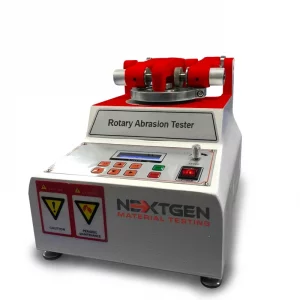
ISO 9352:2012 is an ISO test method for determining the resistance of plastics to abrasive wear using abrasive wheels on a rotating specimen. It is used for comparative evaluation of wear performance and can be applied to moulded test specimens, components, and finished products.
Because wheel selection, applied load, number of revolutions, and the preferred way to report results can vary by material type, ISO 9352 is commonly used alongside a product or material specification that defines the exact test conditions. If you need help matching the right edition and setup to your material requirement, talk with our team.
ISO 9352:2012 — Plastics — Determination of resistance to wear by abrasive wheels
ISO 9352 describes a controlled abrasion test where two abrasive wheels act on a specimen under a specified load while the specimen rotates for a defined number of revolutions. The resulting wear is evaluated using an agreed measure such as mass loss, volume loss, or change in appearance.
This standard provides the general method and equipment framework; the specific test conditions are often set by the relevant material or product standard.
Quick definition
Standard type: Test method (general method).
What it measures: Abrasive wear resistance of plastics under the action of abrasive wheels.
Typical outcome: A comparative wear result after a defined number of revolutions under defined wheel and load conditions.
Not intended for: Cellular (foamed) plastics or paints/coatings.
What This Standard Covers
ISO 9352 covers a repeatable abrasion method using a rotating specimen platform and two freely rotating abrasive wheels. It addresses the core elements needed to run consistent tests, including the abrasion tester arrangement, abrasive wheel concepts, specimen forms, conditioning approach, and general reporting framework.
It is applicable to plastics in different forms, including laboratory-prepared specimens as well as real components or finished products, provided they can be mounted and tested appropriately.
Why This Standard Matters in Testing
Abrasion performance can drive service life, appearance retention, and functional fit for many plastic parts. ISO 9352 helps labs and manufacturers compare materials, evaluate processing effects, and support product qualification when abrasive wear is a known failure or cosmetic concern.
For procurement and QA/QC, the most important practical point is that results are highly dependent on wheel type, applied load, and the specified number of revolutions. Changing any of these can change the ranking of materials, so the test setup must match the referenced requirement.
Common Materials, Product Types, or Applications Covered
ISO 9352 is used for plastics where abrasion is relevant to performance, such as:
- Consumer and industrial plastic components exposed to rubbing contact
- Panels, housings, knobs, and covers where cosmetic wear is important
- Engineering plastics and filled compounds where comparative wear behavior is being screened
- Finished products where a rotating abrasion approach is an accepted qualification route
This method is not used for foamed plastics or paints/coatings under the scope defined by the standard.
Common Test or Verification Workflow
Most ISO 9352 programs follow a straightforward qualification or comparison workflow.
Common workflows: material screening, incoming material comparison, process-change validation, and product qualification against an internal or customer requirement.
Typical test flow: condition specimens, select wheel type and load per the referenced requirement, run abrasion for a specified number of revolutions, then evaluate wear by an agreed measurement method (often mass or volume loss).
Result comparability: Wear results generated with different wheels (even within the same nominal wheel type) may not be directly comparable, so many labs control wheel conditioning and calibration practices closely.
Equipment Commonly Used for This Standard
ISO 9352 points most directly to a rotating-platform abrasion tester configured for two abrasive wheels and controlled loading.
Common equipment: rotating abrasion tester (often rotary-abraser style), abrasive wheel sets, wheel resurfacing/conditioning accessory, specimen clamp ring for thin or flexible specimens, vacuum pick-up/extraction, and a balance suitable for repeatable mass-loss measurements.
Common supporting tools: conditioning environment (commonly 23 °C and 50% RH when required), density determination or dimensional measurement tools when volume loss is reported, and fixtures/adapters for non-standard product shapes.
If you are configuring an abrasion tester package (wheel sets, load weights, vacuum, and specimen holding options), you can request a detailed quote matched to the way your requirement cites ISO 9352.
How to Read This Designation or Revision
Designation format: ISO 9352:2012.
The number (9352) identifies the standard, and the year (2012) identifies the published edition being cited. ISO standards are periodically reviewed, so the cited year matters for aligning equipment details, conditioning expectations, and reporting conventions.
Earlier editions exist (for example, ISO 9352:1995), so contract documents and test plans should specify the exact edition to avoid unintentional changes in setup or interpretation.
Related Standards, Methods, or Frameworks
ISO 9352 is commonly used alongside other ISO documents that control conditioning and specimen preparation routes for plastics when test specimens are moulded or machined. The most relevant companion references are typically the ones cited by the product/material specification that points to ISO 9352.
When comparing results across suppliers or labs, it is also common to align on conditioning atmosphere, specimen preparation method, and the selected wear metric (mass loss, volume loss, or optical/appearance change) so that the comparison remains meaningful.
Talk to us about ISO 9352 abrasion testing setups
If you need to run ISO 9352 with controlled wheel selection, loading, specimen holding, and debris extraction, our team can help you choose an abrasion tester configuration and accessory set that matches your referenced conditions. To discuss options and pricing, request pricing for an ISO 9352-ready system.