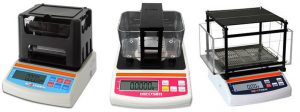
ISO 2781:2018 is an international test method for determining the density of solid vulcanized rubber and thermoplastic rubber. Density is widely used for incoming inspection, compound control, and to estimate mass required for a target molded or extruded volume.
If you need help matching Method A vs. Method B to your product form (sheet, molded parts, tubing, cable insulation), talk with our team about the most practical setup for your lab.
ISO 2781:2018 — Rubber, vulcanized or thermoplastic — Determination of density
This standard describes laboratory procedures to measure density (mass per unit volume) of solid vulcanized and thermoplastic rubbers at a stated temperature. It is commonly referenced in rubber product specifications and quality plans where density is used to confirm compound consistency or support weight/volume calculations.
ISO 2781 is focused on density measurement only. It does not define a broader mechanical test program (such as tensile, tear, hardness, or compression set), but it is often used alongside those methods as part of routine compound and product verification.
Quick Definition
Document type: Test method (two alternative test methods are provided).
Property measured: Density of solid vulcanized and thermoplastic rubbers at a stated temperature.
Two-method approach: Method A (buoyancy/immersion weighing) and Method B (density bottle for cut pieces where air spaces must be eliminated).
What This Standard Covers
ISO 2781 specifies two methods to determine density for solid rubber materials:
Method A: Determines density by weighing the test piece in air and then measuring apparent mass when immersed in water (buoyancy principle). The volume displaced equals the test piece volume.
Method B: Uses a density bottle (pycnometer-style approach) and is intended for cases where the sample must be cut into small pieces to remove trapped air spaces (for example, narrow-bore tubing or electric cable insulation).
The standard also includes expectations for test piece condition (smooth, crack-free, clean), conditioning at standard laboratory temperature before test, and guidance that controlling bubbles, surface tension, and temperature stability matters for reliable results.
Why This Standard Matters in Testing
Density is a fast, practical check that can detect compound-to-compound variation (filler loading, formulation drift, or contamination) without destructive mechanical testing. It is also a direct input when you need to estimate mass required for a known cavity volume, extrusion length, or finished part volume.
Because density is sensitive to trapped air and surface effects, the method selection and the physical handling of the specimen (including bubble removal and temperature stability) can materially affect the result—especially when measuring small parts or low-density rubber that tends to float.
Common Materials, Product Types, or Applications Covered
ISO 2781 applies to solid vulcanized rubber and thermoplastic rubber. In practice, it is commonly used for:
- Rubber compounds and sheets used for quality control and formulation checks
- Molded rubber parts (seals, grommets, bumpers, mounts) where density is a controlled characteristic
- Extruded rubber profiles, tubing, and hose components
- Cable insulation and similar narrow forms where Method B may be preferred to eliminate air spaces
When the product geometry or structure can trap air (internal voids, tight bores, complex profiles), Method B or additional handling precautions are often needed to avoid bias.
Common Test or Verification Workflow
A typical ISO 2781 workflow is straightforward, but it benefits from consistent timing and conditioning practices.
Common workflow: Prepare at least two test pieces → condition at standard laboratory temperature → select Method A or Method B based on sample form and likelihood of trapped air → perform the required weighings → calculate density using the method formula(s) → report the mean value.
Common QC use cases: Incoming material acceptance, in-process compound monitoring, comparison of production lots, and supporting weight/volume calculations for planning and costing.
Equipment Commonly Used for This Standard
ISO 2781 is equipment-light compared with mechanical testing standards, but accuracy depends on having the right balance configuration and the right accessories for immersion weighing and bubble control.
Common equipment (Method A): Analytical balance with suitable resolution (the standard specifies ±1 mg), immersion weighing setup (balance pan straddle/support), beaker, suspension filament or fixture, and a sinker when needed for low-density rubber.
Common equipment (Method B): Analytical balance and a density bottle (pycnometer-style bottle) suited to the test piece size, along with tools and practices to remove trapped air (for example, controlled warming or vacuum desiccation where appropriate for the material and liquid).
Practical selection caution: If you expect to measure small parts (like small O-rings) or materials that float in water, plan the suspension approach and sinker capability up front—small-mass corrections and handling details can drive repeatability.
How to Read This Designation or Revision
Designation format: ISO 2781:2018 identifies the standard number and the publication year (2018).
Edition awareness: ISO 2781:2018 is Edition 5 and remains current (it has been reviewed and confirmed). Earlier editions (such as ISO 2781:2008 and its amendment) are listed as withdrawn on the ISO record.
Why the year matters: Details such as precision information and calibration expectations can change between editions, so equipment configuration, uncertainty expectations, and reporting practices should follow the exact edition cited in your customer or internal requirement.
Related Standards, Methods, or Frameworks
ISO 2781 references broader rubber laboratory practices for preparing/conditioning test pieces and calibration guidance. These supporting documents help standardize sample handling, laboratory temperature practices, and equipment calibration routines that influence density repeatability.
If you are building a full rubber physical-testing workflow, ISO 2781 is typically paired with additional methods (for example, tensile and hardness standards) based on the product specification, but those are outside the scope of this density method.
Get help selecting an ISO 2781 density test setup
If you are equipping a lab for immersion weighing or density-bottle measurements—and want to confirm balance resolution, fixtures, sinkers, and accessories for your sample geometry—you can request a detailed quote for an ISO 2781-oriented density measurement package.