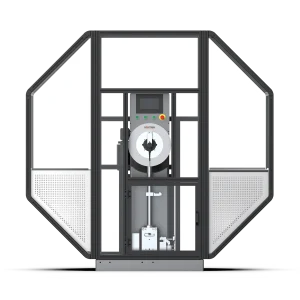
ISO 148-2 is an ISO standard for verifying pendulum-type Charpy impact testing machines used to measure absorbed energy during impact testing of metallic materials.
It is typically referenced when a lab needs to qualify an impact tester for use with Charpy test methods (such as ISO 148-1) and demonstrate that the machine’s condition, setup, and performance are suitable for producing reliable results. If you need help aligning your current machine, verification approach, and documentation to a specific contract requirement, talk with our team.
ISO 148-2: Metallic materials — Charpy pendulum impact test — Part 2: Verification of testing machines
ISO 148-2 focuses on verifying Charpy pendulum impact machines, including checks related to machine constructional elements, overall performance, and the accuracy of absorbed-energy results.
It applies to pendulum impact machines using common striker configurations (including 2 mm or 8 mm strikers) used for Charpy impact testing of metallic materials.
Quick Definition
Document type: Machine verification standard (requirements and procedures for verifying pendulum-type Charpy impact testing machines, rather than a specimen test method).
In simple terms: It tells you how to verify that a Charpy impact tester is performing correctly so absorbed-energy results can be trusted for standards-based testing programs.
What This Standard Covers
ISO 148-2 addresses verification of a pendulum impact testing machine using two complementary approaches that are commonly described as direct and indirect verification.
Direct verification (static checks): Measurement-focused verification of critical machine features and settings, typically using calibrated/traceable instruments.
Indirect verification (dynamic checks): Performance-focused verification using reference test pieces to confirm the machine’s absorbed-energy indications at selected points on the scale.
In practice, a lab often treats ISO 148-2 as the “machine qualification” reference that supports ongoing Charpy testing programs, audits, and customer requirements.
Why This Standard Matters in Testing
Charpy results are sensitive to machine condition, energy losses, and impact geometry. ISO 148-2 is used to reduce avoidable variation by defining how a machine should be checked and how performance should be demonstrated before relying on test data for acceptance decisions or material comparisons.
When Charpy impact data is used for material qualification, production release, or research benchmarking, verification to ISO 148-2 helps support confidence that differences in absorbed energy are coming from the material, not the machine.
Common Materials, Product Types, or Applications Covered
ISO 148-2 is applied to Charpy pendulum impact testing machines used for metallic materials testing in industrial and laboratory settings.
Common use cases: Routine Charpy testing in QA/QC labs, incoming material verification programs, welding and heat-treatment procedure qualification support, and R&D toughness comparisons where Charpy absorbed energy is reported.
Common Test or Verification Workflow
ISO 148-2 is typically used as part of a lab’s equipment control program for Charpy impact testing.
Common workflow: (1) confirm the machine configuration matches the intended Charpy method and striker type, (2) perform direct verification checks using traceable measurement equipment, (3) perform indirect verification using reference test pieces to confirm absorbed-energy performance, and (4) document results and retain records for internal control and external audits.
Practical note: If your purchase or audit requirement calls out specific verification intervals, acceptance limits, or documentation formats, those details are usually driven by the cited edition of the standard and the governing quality system or customer specification.
Equipment Commonly Used for This Standard
ISO 148-2 points most directly to equipment and tooling needed to verify a Charpy pendulum impact tester, rather than the specimen preparation or notch machining process.
Common equipment: Pendulum (Charpy) impact testing machine with the required striker configuration; machine-specific verification and setup tools; measurement instruments suitable for direct verification activities; and reference test pieces used for indirect verification activities.
Buying/quoting considerations: When specifying a new impact tester or upgrading an existing system, alignment between striker configuration (such as 2 mm or 8 mm), energy capacity, readout/data capture, and the lab’s preferred verification approach can affect the configuration you should quote. If you are scoping a new Charpy impact tester setup, you can request a detailed quote based on your striker type, energy range, and verification workflow.
How to Read This Designation or Revision
Designation: ISO 148-2 refers to Part 2 of the ISO 148 series for the Charpy pendulum impact test.
Common citation formats: You may see it referenced as “ISO 148-2” (no year shown) or with an edition year such as “ISO 148-2:2016.”
Revision sensitivity: Verification requirements and acceptance criteria can be edition-dependent. For purchasing, compliance statements, or audit documentation, match the exact edition stated in your customer specification or quality manual.
Related Standards, Methods, or Frameworks
ISO 148-2 is commonly used alongside other parts of the ISO 148 Charpy series.
-
ISO 148-1: Charpy pendulum impact test method for metallic materials (used when running Charpy tests and reporting absorbed energy).
-
ISO 148-3: Reference test pieces and supporting requirements used for indirect verification activities.
Get help selecting a Charpy impact verification setup
If you need to align an impact tester purchase, refurbishment, or verification kit with ISO 148-2 and the edition cited in your contract documents, contact our team to discuss striker configuration, energy range, and the verification approach that best fits your lab workflow.