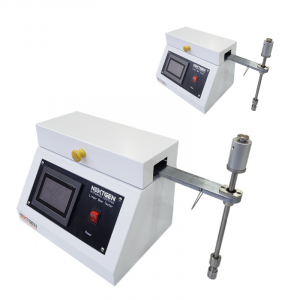
ISO 105-X12:2016 specifies a standardized rubbing (crocking) procedure used to evaluate how readily color transfers from a textile onto another material under dry and wet rubbing conditions.
It is widely used for dyed or printed fabrics, yarns made into test specimens, pile fabrics, and textile floor coverings when you need a repeatable, reportable color-transfer rating. If you need help aligning the right rubbing head style and conditioning setup to your product, talk with our team.
ISO 105-X12:2016 — Textiles — Tests for colour fastness — Part X12: Colour fastness to rubbing
ISO 105-X12 is a test method within the ISO 105 color fastness series that focuses specifically on color transfer caused by rubbing. The method is commonly referenced in textile QA specifications and buyer requirements to reduce the risk of color marking on adjacent materials during use, handling, or installation.
Because rubbing behavior depends on textile construction and surface character (for example, pile versus flat goods), the standard includes alternative rubbing “finger” configurations to better represent different surface types.
Quick Definition
In plain terms: A defined rubbing head repeatedly rubs a cotton rubbing cloth against the textile (dry and/or wetted). The transferred stain on the rubbing cloth is then rated using a standardized grey scale for staining.
What This Standard Covers
ISO 105-X12 covers a controlled, reciprocating rubbing test designed to determine how resistant a textile’s color is to rubbing off and staining other materials.
Typical outputs: Numerical ratings for staining on the rubbing cloth for dry rubbing and wet rubbing (when performed), reported alongside key test-condition details (such as rubbing head used and wet pick-up level).
Key options within the method: The standard allows for two tests (dry and wet) and provides alternative rubbing finger sizes intended for different textile surface types (including pile fabrics and floor coverings versus other textiles).
Why This Standard Matters in Testing
Rubbing color transfer is a common cause of field complaints: staining of light-colored garments, upholstery, automotive interiors, footwear linings, packaging, or adjacent floor-covering materials. ISO 105-X12 provides a repeatable way to compare lots, qualify dyeing/printing processes, and set acceptance criteria.
From an equipment standpoint, repeatability depends heavily on controlling rubbing force, stroke length, cycle count, rubbing cloth specification, and specimen conditioning. Small setup differences can change ratings, especially on heavily colored, pile, or textured constructions.
Common Materials, Product Types, or Applications Covered
ISO 105-X12 is used across many textile product categories where color transfer must be controlled.
- Dyed and printed woven fabrics (apparel, uniforms, workwear)
- Knits and stretch textiles (sportswear, intimate apparel)
- Pile fabrics (velvet-like constructions) and upholstery textiles
- Textile floor coverings and other pile floor products
- Yarns or threads prepared into suitable specimen form for evaluation
Common Test or Verification Workflow
A typical ISO 105-X12 workflow is set up to produce comparable, reportable staining ratings.
Common workflow steps: Condition specimens and rubbing cloth in a standard textile atmosphere, mount the specimen on the crocking platform, run the dry rubbing sequence and rate staining, then run the wet rubbing sequence (using a defined wet pick-up technique) and rate staining after drying.
Reporting focus: Buyers and QA teams usually care about the dry rating, the wet rating, and whether the correct rubbing finger configuration was used for the textile type being evaluated.
Equipment Commonly Used for This Standard
ISO 105-X12 is primarily an apparatus-driven method. The core requirement is a rubbing fastness tester capable of producing a controlled reciprocating stroke with the specified downward force and the appropriate rubbing finger configuration.
Common equipment: Reciprocating crocking (rubbing fastness) tester with interchangeable rubbing fingers; specimen clamps and baseboard; standardized cotton rubbing cloth; a suitable balance for preparing wet rubbing cloth by mass; and controlled conditioning capability consistent with textile standard atmospheres.
Evaluation tools: Grey scale for assessing staining and a consistent lighting/viewing setup to support repeatable visual grading.
If you are comparing crockmeter configurations (flat goods vs pile/floor coverings, manual vs motorized operation, and viewing/accessory packages), you can request a detailed quote matched to the materials you test and the reporting your customers expect.
How to Read This Designation or Revision
ISO 105 identifies the ISO series for tests for color fastness in textiles.
X12 is the specific part number for “colour fastness to rubbing.”
:2016 is the publication year for the cited edition. Many purchase specifications require results to be generated to the exact edition cited, so it is good practice to match the customer’s contract language when setting up and reporting the test.
Related Standards, Methods, or Frameworks
ISO 105-X12 is commonly used alongside other ISO 105 parts and supporting textile standards that define general testing principles, specimen conditioning, and evaluation references.
- ISO 105-A01 (general principles of ISO 105 color fastness testing)
- ISO 105-A03 (grey scale for assessing staining)
- ISO 105-F09 (specification for cotton rubbing cloth)
- ISO 139 (standard atmospheres for conditioning and testing textiles)
- ISO 105-X16 (rubbing fastness guidance for small areas where X12 specimen coverage is difficult)
Get help selecting an ISO 105-X12 rubbing test setup
If you are setting up ISO 105-X12 for the first time (or updating equipment to match a customer’s cited edition), contact our team to discuss specimen type, rubbing finger configuration, conditioning workflow, and the accessories needed for consistent ratings.