GOST 31376-2008 is a GOST test-method standard for evaluating dry building mixtures made with a gypsum binder, commonly used for interior construction and finishing work.
It focuses on practical lab methods used to check incoming materials and finished mix performance (fresh mortar behavior and hardened strength/adhesion results) so teams can make consistent pass/fail decisions and maintain product quality. If you need help matching the cited edition or test setup to your product type, talk with our team.
GOST 31376-2008 — Dry building mixtures based on gypsum binder. Test methods
This standard defines laboratory test methods and the associated test means (apparatus and measurement tools) for gypsum-binder dry building mixtures intended for interior works during construction, reconstruction, and repair.
It is used by manufacturers, QA/QC laboratories, and project stakeholders to evaluate dry mix characteristics, fresh mortar properties, and hardened performance indicators that are commonly specified for gypsum-based interior mixes.
Quick definition
Document type: Test methods standard.
Primary purpose: Provides standardized methods to determine selected quality indicators for gypsum-based dry building mixtures in dry form, as a prepared mortar, and after hardening.
Where it fits: Incoming QC, batch release testing, product qualification, and routine lab verification for gypsum-based interior dry mixes.
What this standard covers
GOST 31376-2008 establishes procedures for evaluating multiple property groups across the material’s lifecycle (powder, fresh mortar, and hardened material). The standard also includes general laboratory conditions and sampling rules that influence repeatability.
Covered indicator groups (high level): Moisture and particle-size (sieve) characteristics for the dry mix; workability/mobility and early behavior for prepared mortar; adhesion and mechanical strength for hardened material.
Why this standard matters in testing
Gypsum-based dry building mixtures are sensitive to water demand, setting behavior, and application consistency. A repeatable test program helps labs separate raw-material variation from process variation and helps procurement and QA/QC teams compare batches or suppliers on a consistent basis.
Because the standard spans both fresh properties (that impact application and finish quality) and hardened properties (that impact service performance), it is commonly used as part of a release workflow that connects production, lab verification, and technical documentation for internal mixes.
Common materials, product types, or applications covered
This standard applies to gypsum-binder dry building mixtures for interior works. In practice, it is most often associated with gypsum-based interior products where users care about consistent mixing behavior, workable life, adhesion to common substrates, and strength after curing.
- Gypsum-based interior dry mixes used in building construction and renovation
- Prepared mortar mixtures intended for application and curing under controlled interior conditions
- Quality checks tied to moisture control, grading consistency, workability, setting behavior, water retention, adhesion, and compressive/flexural strength
Common test or verification workflow
A typical workflow built around this standard follows a sequence that mirrors production control and product performance evaluation.
Common workflow: (1) sample and prepare a lab portion of the dry mix; (2) run dry-state checks such as moisture and sieve analysis; (3) prepare mortar to the required mobility/workability target; (4) evaluate fresh mortar properties (including setting behavior and water retention); (5) fabricate test specimens and cure under controlled conditions; (6) test adhesion and mechanical strengths; (7) record results and averages in the lab log and test report format used by the organization.
Equipment commonly used for this standard
Equipment selection is typically driven by the property group being evaluated (dry mix, fresh mortar, or hardened performance). Many labs configure a small “mortar station” plus a mechanical testing area for flexural/compression and adhesion.
- Sampling and preparation: sealed containers for lab samples; tools for splitting/reducing sample portions
- Dry-state testing: laboratory balance; drying oven (for moisture determination); sieve set (for particle-size / grading checks)
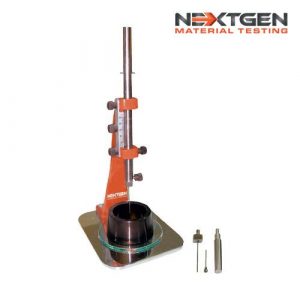
- Mortar preparation and workability: laboratory mixer; measuring cylinder; timing device; Vicat ring (mold) and glass plate for spread/flow style measurements; shaking/flow table (for plastic mortar mobility measurement)
- Setting behavior: Vicat apparatus configured for the standard’s setting-time determination approach
- Water retention: the standard’s ring / paper / gauze device arrangement with accurate weighing before and after
- Hardened mechanical strength: beam molds (commonly 160 x 40 x 40 mm); flexural test fixture/apparatus; compression testing machine capable of the required load range
- Adhesion (bond strength): substrate plates and pull-off style adhesion measurement setup (with appropriate loading alignment and failure mode observation)
- Conditioning/curing: controlled-temperature and humidity chamber/room suitable for specimen conditioning prior to testing
If you are comparing configurations for flexural/compression capacity, adhesion test accessories, or a complete gypsum-mortar lab setup, you can request a detailed quote matched to your throughput and reporting needs.
How to read this designation or revision
Standard number and year: “GOST 31376-2008” identifies the document number (31376) and the approval year (2008).
Effective date: The publication record for this standard shows an effective date of July 1, 2010, and an associated order number for enactment in the Russian Federation context.
Status and replacement considerations: In the Russian Federation registry context, this GOST is shown as no longer in force in Russia, with a referenced replacement document to use in the RF. For procurement, contracts, or compliance work, match the edition and the jurisdiction’s required designation exactly as cited in the controlling specification.
Related standards, methods, or frameworks (when useful)
Gypsum-based dry mix testing commonly references additional GOST documents for related materials and apparatus requirements. In practice, this standard also aligns (in part) with a European gypsum-binder/plaster testing framework for certain fresh-property and adhesion-related methods.
- GOST 31356: Referenced for certain equipment and substrate/test components used within the workflow for dry building mixtures.
- EN 13279-2: A related European test-method framework for gypsum binders and gypsum plasters; some method approaches correspond in specific areas (for example, setting and workability-related determinations).
Discuss your GOST 31376-2008 testing setup
If you want to build or upgrade a gypsum dry-mix test workflow (mobility/workability, setting behavior, water retention, adhesion, flexural strength, and compression strength), contact our team with your product type and the exact properties you need to report.