GB/T 1033 is a Chinese national test method used to determine the density and relative density (specific gravity) of plastics, commonly for quality control, material identification, and batch-to-batch verification.
Because density results are sensitive to specimen condition and the method used, labs typically align the measurement approach, liquid selection, and temperature control with the exact method referenced in the customer or product requirement. If you need help matching your sample form to an appropriate approach, you can talk with our team.
GB/T 1033-1986 — Test method for density and relative density of plastics
GB/T 1033-1986 is a recommended (GB/T) national standard that describes procedures for measuring density and relative density of plastics (excluding foamed plastics). Density is widely used as a fast screening property to support material verification, composition or crystallinity checks, and dimensional/mass calculations tied to production control.
This document has been withdrawn and replaced by later GB/T 1033 parts in common modern referencing, so purchase specifications should be checked for the exact edition and replacement method expected.
Quick Definition
What it is: A plastics density / relative density test method standard.
What it measures: Density (mass per unit volume) and relative density (specific gravity) under controlled conditions.
Typical output: A reported density value (and/or relative density) tied to the selected method, liquid, and temperature conditions.
What This Standard Covers
GB/T 1033-1986 is intended for determining density and relative density of plastics other than foamed plastics. It supports multiple procedural approaches so a lab can choose a method that fits the specimen form (for example, molded/extruded pieces versus small pieces or particulate forms).
In practice, density measurement under GB/T workflows generally depends on:
- Specimen form (solid part, film, small cut pieces, granules/powder)
- Whether the specimen can trap air or absorb liquid
- Choice of immersion liquid and wetting behavior
- Temperature control and balance resolution appropriate for the target uncertainty
Why This Standard Matters in Testing
Density is often used as a fast, equipment-light check that can detect changes in formulation, filler content, crystallinity, or processing history. In plastics purchasing and QA/QC, density is commonly used to:
- Confirm incoming resin or compound identity against a datasheet requirement
- Monitor production stability over time (trend monitoring)
- Support acceptance testing when a product specification calls out density or specific gravity
- Provide a basic physical property for design calculations and mass/volume conversions
For supplier quality and product compliance, the key is to ensure the method choice and conditioning details match what the requirement expects—density can shift with specimen preparation and internal voids.
Common Materials, Product Types, or Applications Covered
GB/T 1033-1986 is associated with non-foamed plastics and is commonly applied across general polymer products and materials where density is a specified property, such as:
- Thermoplastic molded parts and extrusions
- Plastic sheets, rods, tubes, and films (where a suitable method is selected)
- Pellets, granules, flakes, and powders (when an appropriate procedure is used)
- Compounded plastics where density helps indicate filler loading or composition consistency
If the product is cellular/foamed, or if the part has significant porosity, a different approach (or a different standard) may be required to avoid biased results.
Common Test or Verification Workflow
Most labs run plastics density checks as a short, repeatable QC workflow tied to a controlled temperature environment. While the exact steps depend on the selected method, the typical workflow includes:
- Conditioning specimens (when required by the controlling specification)
- Preparing a representative specimen (clean surface; avoiding trapped bubbles and voids where possible)
- Measuring mass in air and using a controlled immersion or volume technique appropriate to the specimen form
- Controlling bath/liquid temperature and documenting the liquid used
- Calculating density/relative density and reporting the method and conditions used
Practical caution: Seemingly small differences—wire/basket buoyancy setup, wetting, bubbles, and temperature stability—can materially affect results, especially for small specimens or tight tolerances.
Equipment Commonly Used for This Standard
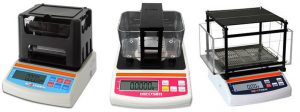
GB/T 1033-style density testing is typically implemented with a precision balance and accessories matched to the chosen approach. Common equipment families include:
Analytical or precision balance: Selected for sufficient readability and repeatability for the specimen mass and target uncertainty.
Density determination kit (hydrostatic weighing setup): Immersion basket or suspension fixture, thin wire/filament support, and a beaker/tank arrangement to measure apparent mass in liquid.
Temperature-controlled bath and thermometer: Used to stabilize immersion liquid temperature when controlling density calculations tightly.
Pycnometer (where applicable): A liquid pycnometer approach is often used for small pieces, films, or particulate forms when a hydrostatic setup is not ideal.
Optional upgrades for throughput: Dedicated density balances, automated wetting/immersion fixtures, and accessories that reduce operator variability.
If you are selecting a balance class, bath size, or fixture configuration for your sample geometry and throughput targets, you can request pricing for a complete density-testing setup.
How to Read This Designation or Revision
Designation format: “GB/T 1033-1986” indicates a recommended Chinese national standard (GB/T), standard number 1033, published in 1986.
Status sensitivity: GB/T 1033-1986 has been withdrawn (historically replaced). Many requirements that informally cite “GB/T 1033” may actually expect the later GB/T 1033 series methods, so the controlling document should be checked for the exact citation.
Edition matching: For compliance work, always align the lab report to the exact cited document (including any part number and year), because method options and reporting expectations can differ between legacy and replacement documents.
Related Standards, Methods, or Frameworks
When newer revisions are required, density testing is commonly referenced under the GB/T 1033 series that replaced GB/T 1033-1986, including:
- GB/T 1033.1-2008 (replacement for GB/T 1033-1986)
- GB/T 1033.2-2010 (density gradient column method)
- GB/T 1033.3-2010 (gas pycnometer method)
If a procurement document cites “GB/T 1033” without a year or part number, clarifying the intended method is important before quoting equipment or scheduling lab work.
Get help selecting a GB/T plastics density testing setup
If you share your material type, specimen form (part, film, pellets, powder), expected density range, and throughput goals, we can recommend a practical configuration and options for temperature control, fixtures, and reporting. To compare configurations and lead times, request a detailed quote.