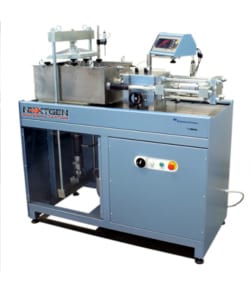
EN ISO 12957 is a geosynthetics interface-friction testing standard series used to characterize how geotextiles, geotextile-related products, and geosynthetic barriers interact with soils or other geosynthetics under controlled normal stress.
If you need help determining whether a direct shear setup (Part 1) or an inclined plane setup (Part 2) is the best match for your project requirements and cited standard callouts, talk with our team.
EN ISO 12957 (series) — Geosynthetics — Determination of friction characteristics
EN ISO 12957 is used for laboratory evaluation of interface friction behavior relevant to stability design and performance assessment of geosynthetics in contact with soils or other geosynthetic layers.
This is a test-method series rather than a material specification. It is typically referenced when a project needs comparable friction parameters for design calculations, product comparisons, or project-specific interface checks.
Quick Definition
What it is: A multipart test-method series for measuring friction characteristics at geosynthetic interfaces.
What it helps determine: Interface shear resistance / friction behavior for geosynthetics against soil or against another geosynthetic, under defined normal stress and displacement conditions.
Common parts used: Part 1 (direct shear test) and Part 2 (inclined plane test for low normal stress conditions).
What This Standard Covers
EN ISO 12957 addresses interface friction measurements where one surface is a geosynthetic (such as a geotextile or geosynthetic barrier) and the counter-surface is a soil or another geosynthetic product.
Part 1 (direct shear): Commonly used as an index-type approach (often with standardized sand) and can also be applied with project soils or geosynthetic-to-geosynthetic pairings under defined normal stress and controlled displacement.
Part 2 (inclined plane): Commonly used for low normal stress interface evaluation using an inclining plane apparatus; often applied as a performance-oriented method with project soils and can also be used as an index-style method with standard sand.
Why This Standard Matters in Testing
Interface friction can control the stability of layered systems where a geosynthetic is placed against soil or another geosynthetic (for example in lining, barrier, reinforcement, or protection assemblies). EN ISO 12957 provides a standardized way to generate comparable data for design checks, material selection, and engineering justification packages.
Because results depend strongly on the paired materials, normal stress, and the chosen apparatus/method, matching the test configuration to the project’s cited part and interface condition is critical for meaningful reporting.
Common Materials, Product Types, or Applications Covered
EN ISO 12957 is commonly applied when assessing friction behavior involving:
- Geotextiles (woven and nonwoven) against soils
- Geosynthetic barriers / geomembrane-type products against soils or geotextiles
- Geosynthetic-to-geosynthetic interfaces in layered systems
Typical application contexts: Slopes, embankments, retaining structures, landfill lining and capping systems, hydraulic works, and other geotechnical assemblies where interface shear behavior influences stability.
Common Test or Verification Workflow
Most EN ISO 12957 programs follow a practical sequence: define the interface pair (geosynthetic vs. soil or geosynthetic), select the applicable part of the series, then run a controlled interface test under the specified normal stress and displacement conditions.
Common workflow elements:
- Select the relevant part (direct shear vs. inclined plane) based on the stress regime and project callout
- Define the counter-surface (standard sand for index comparison, or site-specific soil for project performance evaluation)
- Condition and prepare specimens per the standard’s referenced requirements
- Run replicate tests and report friction characteristics in the format required by the cited part/edition
Equipment Commonly Used for This Standard
EN ISO 12957 does not point to a universal testing machine (UTM) configuration. Instead, it typically calls for specialized geosynthetics interface-friction rigs matched to the selected part.
Common equipment families:
- Direct shear apparatus with normal loading capability and controlled horizontal displacement (for Part 1-type testing)
- Inclined plane apparatus with controlled angle increase / angle measurement and suitable normal loading for low-stress evaluation (for Part 2-type testing)
- Fixtures/boxes to hold soil and geosynthetic specimens without introducing unintended restraint
- Instrumentation for displacement and load/force measurement, as required by the method
Quoting caution: The needed fixture size, specimen accommodation, normal stress range, and data outputs depend on the cited part and the interface type (soil vs. geosynthetic). If you are comparing configurations for a lab build-out, you can request a detailed quote with the test part, specimen sizes, and normal stress targets you plan to run.
How to Read This Designation or Revision
EN ISO 12957 is a multipart designation. In procurement documents and test plans, it is typically cited with a part number (for example, “EN ISO 12957-1” or “EN ISO 12957-2”) and often includes a publication year.
Practical interpretation: Always match the exact cited part and edition because equipment configuration, specimen preparation details, and reporting expectations can differ between parts and between revisions.
Related Standards, Methods, or Frameworks
EN ISO 12957 friction testing is often used alongside broader geosynthetics test plans that cover tensile behavior, puncture/CBR-type resistance, durability, and hydraulic characteristics. The most relevant companion references depend on the geosynthetic function (separation, filtration, reinforcement, barrier, protection) and the application environment.
Where contracts specify “standard sand” for index testing or require site-specific soils for performance evaluation, ensure the soil selection and preparation requirements are aligned across the full testing scope.
Talk with us about EN ISO 12957 equipment and configuration
For many labs, the key decision is selecting the correct apparatus (direct shear vs. inclined plane), fixture sizing, and instrumentation for the interfaces you need to run. To discuss your application and get to a buildable configuration, contact our team.