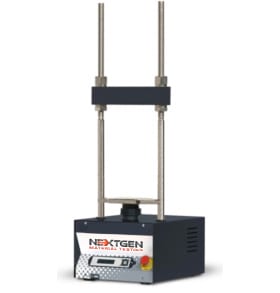
EN 12697-23 is a European test method for determining the (splitting) indirect tensile strength of cylindrical bituminous mixture (asphalt) specimens.
It is commonly used in asphalt mixture design, production control, and investigative testing when you need a tensile-strength indicator from a practical compression-style loading setup. If you need help aligning your specimen type, conditioning approach, and reporting needs to the edition you must follow, talk with our team.
EN 12697-23: Bituminous mixtures – Test methods – Part 23
EN 12697-23 specifies a method to measure indirect tensile strength by applying a diametral load to a cylindrical bituminous specimen until failure (a “splitting” tensile result derived from the peak load and specimen dimensions).
This method is frequently referenced in performance-related asphalt test programs because it produces a repeatable strength metric from laboratory-compacted or field-cored specimens.
Quick Definition
What it is: A laboratory test method for (splitting) indirect tensile strength of cylindrical asphalt/bituminous specimens.
What it outputs: An indirect tensile strength value calculated from maximum applied load and specimen geometry.
Where it fits: Often used as a strength check on its own and as a foundational strength measurement used by other asphalt performance evaluations.
What This Standard Covers
The standard focuses on the indirect tensile strength measurement of cylindrical bituminous mixture specimens. It centers on how the specimen is conditioned, loaded, measured, and reported so results can be compared across labs and projects.
Because the strength calculation depends on specimen size, consistent dimensional measurement and clear documentation of specimen condition and temperature are essential for usable results.
Why This Standard Matters in Testing
Indirect tensile strength is commonly used as a practical indicator of asphalt mixture integrity and cohesion. It is also widely used when projects need a tensile-related metric without running a direct tensile test configuration.
EN 12697-23 is also important because other methods may rely on its strength result as an input or comparison point (for example, in water sensitivity assessments that use ITS-based comparisons).
Common Materials, Product Types, or Applications Covered
EN 12697-23 is used for bituminous mixtures (asphalt) in road and pavement engineering contexts.
Common specimen sources: Laboratory-compacted cylindrical specimens and cylindrical cores taken from asphalt layers (when applicable to the project specification).
Common use cases: Mixture design studies, QC/QA strength trending, comparative evaluations (e.g., before/after conditioning), and investigative pavement materials work.
Common Test or Verification Workflow
A typical EN 12697-23 workflow includes preparing or selecting cylindrical specimens, conditioning them to the specified test condition, measuring dimensions, loading the specimen across its diameter to failure, and calculating/reporting the indirect tensile strength.
Practical lab considerations: The conditioning temperature control, platen alignment/loading geometry, and dimensional measurement practices can materially affect repeatability and should be matched to the cited edition and the governing project requirement.
Equipment Commonly Used for This Standard
EN 12697-23 typically points to a controlled compression loading setup with stable temperature conditioning and straightforward dimensional metrology.
Common equipment: Electromechanical or servo-hydraulic testing frame with suitable load capacity, compression platens or an indirect tensile (“splitting”) fixture arrangement for cylindrical specimens, and a calibrated load measurement system.
Conditioning and measurement: Temperature-controlled chamber, cabinet, or bath appropriate to the specified test temperature/conditioning requirement; calipers or other dimensional measurement tools; and data acquisition/software for capturing peak load and reporting results.
If you are configuring a frame, fixtures, and conditioning hardware as a complete station, you can request a detailed quote with the specimen sizes and target temperature range you need to support.
How to Read This Designation or Revision
EN 12697 identifies the European test-methods series for bituminous mixtures.
Part 23 designates the specific method for determining indirect tensile strength of bituminous specimens.
Revision/year: The year suffix (for example, EN 12697-23:2017) identifies a specific published edition. National adoptions often add a national prefix while keeping the EN number (for example, BS EN 12697-23 or DIN EN 12697-23). Because conditioning and reporting details can be edition-sensitive, always align equipment setup and documentation to the exact version cited in your contract documents.
Related Standards, Methods, or Frameworks when useful
EN 12697-23 is commonly used alongside other EN 12697 parts that address specimen preparation/selection and supporting measurements.
Frequently paired reference: EN 12697-12 (water sensitivity) uses indirect tensile strength results as part of its evaluation approach.
Get help selecting an EN 12697-23 test setup
If you are matching equipment to a project specification (specimen diameter/thickness, conditioning temperature, fixture approach, and reporting needs), contact our team and we will help scope a configuration that fits your lab workflow.