DIN 53863 / DIN 53865 is a common way textile and interior-material specifications reference two related DIN test requirements: abrasion testing of textile fabrics (DIN 53863 series) and a tumbler-based evaluation of fibre migration tendency (DIN 53865).
If you are working from an OEM, upholstery, or fabric purchase specification that cites “DIN 53863/53865,” it is important to confirm the exact DIN 53863 part number and the exact pass/fail criteria in the customer document. If you want help mapping a spec callout to the right test setup, contact our team.
DIN 53863 / DIN 53865
These designations are used in textiles to evaluate surface durability and appearance risk during use. DIN 53863 addresses abrasion testing of textile flat structures (with multiple parts covering specific setups). DIN 53865 addresses fibre migration tendency using a tumbler method.
In practice, the “DIN 53863/53865” citation is often used as a shorthand in procurement specs and internal test plans to indicate that both abrasion resistance and fibre migration/appearance behavior must be assessed.
Quick Definition
DIN 53863 / DIN 53865: A paired DIN reference used for textile performance screening—abrasion resistance per DIN 53863 (part-dependent) plus fibre migration tendency per DIN 53865 (tumbler method).
What This Standard Covers
When cited together, the intent is typically to cover two different but complementary risks:
- Abrasion wear of the textile surface (changes to the surface, damage development, or end-of-test condition as defined by the cited DIN 53863 part and the customer specification).
- Fibre migration tendency (the tendency of fibres to work out of the structure and affect appearance, evaluated using a tumbler-based exposure defined in DIN 53865).
Because DIN 53863 is a series and DIN 53865 is its own document, the acceptance criteria usually come from the product specification (OEM standard, supplier requirement, or internal quality plan) rather than from a single combined DIN document.
Why This Standard Matters in Testing
Abrasion and fibre migration issues can drive visible quality concerns such as rapid wear, surface change, and unwanted fibre release that impacts appearance. For many textile applications, passing tensile or tear requirements is not enough; long-term surface behavior under rubbing and agitation is also critical.
For lab managers and QA/QC teams, these references help ensure incoming materials, supplier changes, and lot-to-lot variation are evaluated using repeatable, spec-defined exposures.
Common Materials, Product Types, or Applications Covered
DIN 53863/53865 callouts are most commonly associated with textile flat structures where appearance and surface durability matter:
- Upholstery and seating fabrics
- Automotive interior textiles and trim fabrics
- Technical textiles where rubbing contact is expected in service
- Fabric constructions where fibre movement/migration is a known risk
Always confirm whether the requirement applies to the face fabric only, a laminated composite, or a full upholstery build-up, since backing layers and finishes can significantly change performance.
Common Test or Verification Workflow
Most programs that cite DIN 53863/53865 follow a workflow like this:
1) Define the exact citation: identify the DIN 53863 part number required and confirm whether DIN 53865 is required as written or referenced for legacy continuity.
2) Condition and prepare specimens: follow the customer or internal lab procedure for conditioning, orientation (warp/weft or machine/cross direction), and any pre-treatment (for example, after finishing or after cleaning cycles if required by the spec).
3) Run abrasion exposure: perform the abrasion test per the cited DIN 53863 part, using the specified load, abradant, and endpoint definition.
4) Run fibre migration exposure: perform the tumbler exposure per DIN 53865 and evaluate the defined appearance or fibre-release outcome.
5) Report and compare: document test conditions, specimen details, and the acceptance decision against the controlling specification.
Equipment Commonly Used for This Standard
Equipment selection depends on the exact DIN 53863 part cited and the lab’s required throughput, but commonly includes:
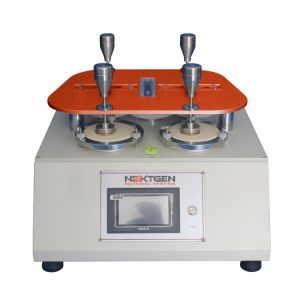
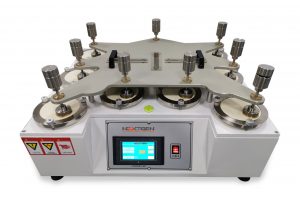
- Textile abrasion tester configured to the required DIN 53863 method (including the appropriate specimen holders, loading system, and abradant configuration required by the controlling document).
- Tumbler/drum apparatus capable of running the DIN 53865 tumbler exposure with repeatable speed and cycle control.
- Specimen preparation tools such as cutters/templates and clamping frames appropriate to the fixture geometry of the selected method.
- Evaluation aids (as required by the spec) such as lighting/inspection setup for appearance grading and documentation.
If you are matching an OEM requirement to a specific abrasion platform and tumbler configuration, you can request a detailed quote with the citation, sample description, and target throughput.
How to Read This Designation or Revision
DIN 53863: this is a multi-part DIN series. Many specifications require a specific part number (for example, “DIN 53863-1” or “DIN 53863-2”), and the part number can change the apparatus configuration and comparability of results.
DIN 53865: this DIN document is commonly encountered as “DIN 53865:1998-07” and is listed as withdrawn, but it may still be referenced in legacy specifications. If your customer has not explicitly updated the callout, you may need to test to the cited edition for contractual compliance.
Revision sensitivity: do not assume results are comparable across different abrasion methods or across different DIN 53863 parts. Align the method, endpoint definition, and reporting format to the exact citation in the controlling document.
Related Standards, Methods, or Frameworks
Many textile durability programs also reference other abrasion, pilling, or appearance-retention methods. If your specification includes additional requirements beyond DIN 53863/53865 (for example, separate pilling or snagging evaluations), keep the test plan method-specific so each result can be traced to the correct procedure.
Talk with us about a DIN 53863 / DIN 53865 test setup
If you need help interpreting a procurement or OEM spec that cites DIN 53863/53865—especially when the DIN 53863 part number is unclear or a withdrawn DIN 53865 citation is still required—talk with our team about your material, acceptance criteria, and the most practical equipment path.