DIN 53799:1986-01 is a DIN test-method standard for evaluating decorative laminated sheets and decorative surfaces based on aminoplastic resins (commonly melamine-based decorative surfaces) used on laminate boards and coated wood-based panels.
It is typically referenced when a buyer, specifier, or lab needs a consistent way to check key performance properties such as thickness, mechanical strength, dimensional response to climate changes, and surface durability characteristics (for example abrasion and resistance to common surface damage mechanisms). If you need help mapping your product type to the right current test document or test plan, you can talk with our team.
DIN 53799:1986-01 — Decorative laminated sheets on basis of aminoplastic resins; test method
DIN 53799 is used to evaluate decorative laminate sheet products and decorative surfaces that rely on aminoplastic resin systems. It brings multiple property checks together under one designation, which is helpful when qualifying decorative surfaces for furniture, interior fixtures, and similar applications.
Because this document has been withdrawn and replaced by newer European standards for key product categories, many organizations encounter DIN 53799 in legacy specifications, historical qualification reports, or customer drawings that have not been updated.
Quick definition
Document type: Test method standard (multi-property test and evaluation framework for decorative laminate sheets / aminoplastic-resin decorative surfaces).
Typical use: Product qualification and comparative testing of decorative laminate boards and coated decorative panels.
What it points to: A combined workflow covering basic dimensional checks, mechanical strength tests, climate-related dimensional behavior, and surface durability testing (not a single standalone bench test).
What this standard covers
DIN 53799:1986-01 addresses testing for decorative laminated sheets based on aminoplastic resins and includes a set of evaluations that can cover (depending on the product category being tested):
- Thickness measurement
- Mechanical strength testing (for example tensile and flexural properties, where applicable)
- Behavior under impact loading (where applicable)
- Dimensional change under climate variation
- Surface wear/abrasion behavior
- Susceptibility to surface cracking
- Resistance to specific surface exposures referenced in the standard’s test program (for example cigarette glow for certain product types)
Practical takeaway for labs: DIN 53799 is often best treated as a “test suite” designation. The exact set of required properties can vary by laminate/panel type and by how a purchaser’s specification cites the standard.
Why this standard matters in testing
Decorative surfaces can look acceptable while still failing early in service due to wear-through, impact damage, climate-driven movement, or cracking. DIN 53799 is cited to reduce ambiguity in how these risks are evaluated and to make supplier-to-supplier comparisons more meaningful.
For procurement and QA/QC teams, the biggest operational issue is edition control: legacy DIN callouts may not match current qualification needs, and the replacement EN documents may break the old “single designation” into more specific parts and requirements.
Common materials, product types, or applications covered
DIN 53799 is commonly associated with melamine/aminoplastic-based decorative laminate surfaces and decorative panels used in interior applications.
Common product contexts: Decorative high-pressure laminate (HPL) boards and decorative resin-impregnated surface layers applied to wood-based panels (such as decorative fiberboard or particleboard-type substrates), where the surface layer performance is critical to end use.
Common test or verification workflow
DIN 53799 testing is typically run as part of qualification, incoming inspection, or comparative benchmarking of decorative surfaces.
Typical workflow steps:
- Define the product type and which DIN 53799 test items apply to that product category.
- Condition specimens as required by the cited program (especially important for climate-related dimensional checks).
- Run the applicable dimensional and mechanical tests (thickness and strength-related checks where relevant).
- Run surface durability tests such as abrasion/wear and other specified surface resistance exposures.
- Report results in a way that clearly ties the outcome to the product type, substrate configuration, and the exact edition/designation cited.
If a customer drawing references DIN 53799 without specifying which test items apply, clarifying the intended test list early can prevent mismatched quotes, fixture gaps, or incomplete reporting.
Equipment commonly used for this standard
Because DIN 53799 covers multiple evaluations, equipment selection depends on which test items are required for your product type.
Common equipment families:
- Dimensional measurement tools: Thickness gauges and measurement fixtures appropriate for laminated panels.
- Universal testing machine (UTM): Used for strength-related checks (for example tensile and/or flexural testing where applicable), with appropriate grips/fixtures for the specimen form.
- Flexural fixtures: 3-point or 4-point bending fixtures sized for laminate/panel specimens when flexural testing is part of the program.
- Impact test equipment: A suitable impact apparatus/fixture when impact behavior is required.
- Climate/conditioning capability: Environmental chamber(s) or controlled conditioning space for climate-change exposure and dimensional-response evaluations.
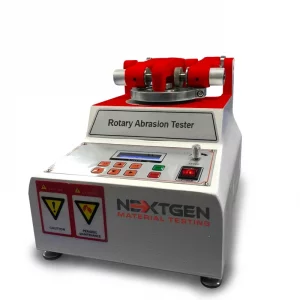
- Abrasion/wear tester: Rotary abrasion systems (commonly rotary-platform abrasion testers) are frequently used for laminate surface wear assessments when this portion of the program is specified.
For quoting and setup, the most important inputs are specimen geometry/thickness range, the surface type (overlay/top layer), and which DIN 53799 test items are in scope. If you are equipping a lab or adding abrasion and mechanical capability for decorative panels, you can request pricing for an equipment package matched to your required test list.
How to read this designation or revision
Common citation format: DIN 53799:1986-01.
What the suffix typically indicates: The year and month of the published edition (for example 1986-01).
Status note: DIN 53799:1986-01 is published as withdrawn, and it has been replaced by newer EN-based documents for major laminate/panel categories. When a contract or customer specification cites DIN 53799, confirm whether it is a strict legacy requirement or whether the intent is to test to the current replacement standard(s).
Related standards, methods, or frameworks
DIN 53799 is commonly encountered alongside (or superseded by) European standards that address decorative laminates and melamine-faced/overlay-type decorative panels with more current structure and requirements.
Commonly referenced replacements: DIN EN 438 series (high-pressure decorative laminates) and DIN EN 14323 (wood-based panels with decorative surfaces), depending on product type and the scope of the specification.
Get help specifying the right test setup
If you are updating a legacy DIN 53799 callout, expanding into decorative-surface testing, or need a practical plan for running the applicable test items on your laminate or coated panel products, contact our team to align the standard designation, required properties, and equipment configuration.