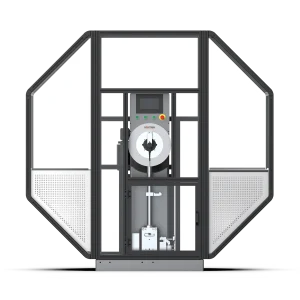
ASTM E2248 is a standard test method for notched-bar impact testing of metallic materials using miniaturized Charpy V-notch (MCVN) specimens. It is commonly used when standard Charpy V-notch specimens cannot be produced due to limited material volume, thin sections, small components, or when additional tests are needed from previously tested material.
If you are unsure whether a miniature specimen approach is appropriate for your material form or your existing impact tester setup, contact our team to talk through the standard’s intent and practical equipment considerations.
ASTM E2248 Standard Test Method for Impact Testing of Miniaturized Charpy V-Notch Specimens
ASTM E2248 provides requirements for performing MCVN impact tests on metallic materials. The method is intended to produce absorbed energy results (and, when instrumented, force-related data) using specimen and fixture configurations that are smaller than conventional Charpy V-notch specimens.
A key concept in E2248 is that “miniature” specimens are not the same as “sub-size” Charpy specimens referenced elsewhere. E2248 focuses on specimens with reduced linear dimensions relative to the standard Charpy specimen described in ASTM E23.
Quick Definition
Document type: Test method.
In plain terms: A way to run Charpy-style impact testing when you must use a smaller notched specimen than the conventional Charpy V-notch bar, while still maintaining controlled machine setup, calibration/verification practices, and consistent reporting.
What This Standard Covers
ASTM E2248 addresses the test apparatus and setup needed to break miniaturized Charpy V-notch specimens and report impact performance in a consistent way.
- Use of MCVN specimens for metallic materials when standard Charpy specimens are impractical.
- Minimum requirements for inspection and calibration/verification-related checks of the impact system and measurement/readout.
- Test execution and reporting expectations intended to support repeatable absorbed energy results.
- Guidance that absorbed energy may be obtained from the machine’s energy readout, and that instrumented force measurement may be used to develop a force–displacement type record when applicable.
E2248 also makes clear that correlating miniature results to conventional Charpy V-notch results (or using miniature results for specific structural integrity decisions) is application-dependent and remains the responsibility of the user.
Why This Standard Matters in Testing
Miniaturized impact testing is often driven by real-world constraints: limited material availability, small coupons, thin product forms, or the need to extract multiple toughness indicators from a constrained volume.
In procurement and lab workflows, ASTM E2248 frequently becomes the “bridge” that allows impact testing to proceed when conventional Charpy specimen geometry is not feasible—while still keeping the work tied to a recognized, standards-based method.
Common Materials, Product Types, or Applications Covered
ASTM E2248 is used for metallic materials where miniaturized Charpy V-notch specimens are necessary or preferred.
Common situations: Thin sections, small components, limited-quantity development alloys, material removed from in-service components, or repurposed material from previously tested specimens (for example, when additional notched impact comparisons are needed).
Typical users: Materials laboratories supporting QA/QC release testing, R&D screening, failure analysis, and programs where specimen volume is constrained (including some nuclear, aerospace, and energy-related applications).
Common Test or Verification Workflow
While the exact details depend on the edition cited and the lab’s objective, an ASTM E2248 workflow typically follows a familiar Charpy-style sequence adapted for miniature specimens.
- Select or machine MCVN specimens appropriate to the available material geometry.
- Prepare the notch and verify key specimen features using appropriate inspection tools.
- Set up a pendulum impact system configured for miniature testing (including the correct striker and supports/anvils).
- Condition specimens when temperature-specific testing is required (using handling practices suitable for small specimens).
- Break specimens and record absorbed energy; when using instrumented capability, capture force-related signals as required by the method and the lab’s reporting needs.
- Report results in the format expected by the governing procedure, purchase order, or program requirement.
Equipment Commonly Used for This Standard
ASTM E2248 is centered on Charpy-style pendulum impact testing, with fixtures and measurement suitable for miniaturized specimens.
Common equipment families:
- Charpy pendulum impact testers capable of the required energy range for miniature specimens.
- Miniature-specimen supports/anvils and a compatible striker geometry (often implemented as modified or dedicated tooling compared with conventional Charpy setups).
- Energy measurement/readout with sufficient resolution for the smaller absorbed energies typical of miniature specimens; encoder-based readout is commonly preferred over dial-only readouts in modern systems.
- Optional instrumented impact capability (force measurement and high-speed data acquisition) when the testing program requires force-time (and derived) information rather than absorbed energy alone.
- Specimen measurement tools suitable for small features (optical measurement systems and/or precision contact metrology depending on the notch and dimensional requirements).
- Temperature conditioning equipment and appropriate transfer tools when testing is performed away from ambient conditions.
If you are selecting a new impact tester or retrofitting an existing machine for miniature Charpy work, you can request a detailed quote for a configuration matched to your specimen type, energy range, and data collection needs.
How to Read This Designation or Revision
“ASTM E2248” is the base designation for this standard test method. When a suffix year is shown (for example, ASTM E2248-25), it indicates a specific published edition that may contain important differences in requirements, reporting, or referenced documents.
Revision sensitivity: Equipment setup details (such as striker/anvil configuration and measurement requirements) and reporting expectations can depend on the exact edition cited in your customer specification or program document, so labs should align procedures to the cited revision.
Related Standards, Methods, or Frameworks
ASTM E2248 is closely associated with conventional Charpy V-notch testing practice and with instrumented impact testing when additional force-related data are required.
- ASTM E23: A primary reference for conventional notched bar impact testing of metallic materials and for context on standard Charpy specimen practice.
- ASTM E2298: Commonly referenced when instrumented impact testing requirements are needed for Charpy and miniaturized Charpy applications.
Get help aligning ASTM E2248 to your impact testing setup
If you need to match a quoted system to a specific ASTM E2248 edition, specimen configuration, or data output requirement (absorbed energy only vs instrumented signals), talk with our team and we’ll help narrow down the right machine capacity, tooling, and instrumentation options for your lab.