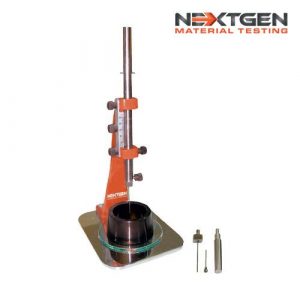
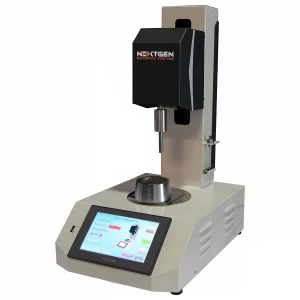
AASHTO T 131 is a standard test method used to determine the time of setting of hydraulic cement paste using a Vicat needle apparatus. It is commonly used in cement and concrete materials laboratories to document initial and final set behavior for quality control, mixture evaluation, and acceptance-related reporting.
If you need help matching your Vicat setup (manual vs. automatic) to the edition your agency or specification cites, you can talk with our team about configuration and reporting expectations.
AASHTO T 131 – Standard Method of Test for Time of Setting of Hydraulic Cement by Vicat Needle
This method focuses on the stiffening behavior of a cement paste specimen over time, based on controlled penetration criteria using a Vicat needle. Laboratories use the results to document setting characteristics under standardized preparation and conditioning requirements.
AASHTO T 131 is typically performed on hydraulic cement paste (not concrete) and is often referenced alongside other cement test methods when evaluating cement performance and consistency.
Quick Definition
AASHTO T 131 measures cement paste setting time by tracking Vicat needle penetration at defined intervals to determine initial set and final set.
Common outcome: Reported initial and final setting times under the method’s preparation, timing, and environmental controls.
What This Standard Covers
AASHTO T 131 describes how to determine the time of setting of hydraulic cement using a Vicat needle apparatus. The standard includes a reference approach using a manual Vicat apparatus and also allows the use of an automatic Vicat device when it meets the method’s performance/qualification expectations.
What it does not do: It is not a compressive strength test and it does not directly measure concrete set in the field; it is a lab procedure centered on cement paste behavior.
Why This Standard Matters in Testing
Setting time is a key indicator of how quickly a cement paste transitions from plastic to rigid. In production and QA/QC environments, AASHTO T 131 results are commonly used to screen cement consistency, compare sources or lots, and support compliance documentation when setting-time limits are specified.
Because setting time is sensitive to specimen preparation, temperature/humidity control, and timing discipline, consistent equipment setup and repeatable operating practices matter as much as the instrument itself.
Common Materials, Product Types, or Applications Covered
AASHTO T 131 is commonly applied to hydraulic cement used in transportation and civil infrastructure concrete, including cement evaluated for paving and structural concrete applications.
Typical users: Cement plants, DOT/agency laboratories, independent construction materials labs, and concrete/materials R&D teams.
Common Test or Verification Workflow
A typical AASHTO T 131 workflow includes preparing a cement paste specimen, molding it in the Vicat mold, maintaining the required environmental conditions, and taking penetration readings at defined time intervals until the initial and final set criteria are reached.
Common workflow dependencies: Cement paste preparation and consistency requirements are often tied to companion cement test procedures, so labs typically manage T 131 as part of a broader cement acceptance/characterization sequence rather than as a stand-alone test.
Equipment Commonly Used for This Standard
Equipment selection for AASHTO T 131 is centered on a compliant Vicat apparatus and the supporting tools required to prepare and condition the cement paste specimen consistently.
Common equipment: Manual Vicat apparatus (reference setup) or an automatic Vicat machine (when qualified), Vicat mold and accessories, penetration needles/plungers as required by the method, a temperature/humidity-controlled conditioning environment as required, and basic cement paste preparation tools (mixing and timing).
When quoting or configuring equipment, the most important practical details usually come down to whether the lab needs manual vs. automatic operation, how environmental conditioning will be controlled, and how results will be recorded and archived.
If you are equipping a cement lab for routine setting-time reporting, you can request pricing for a Vicat apparatus package sized to your throughput and documentation needs.
How to Read This Designation or Revision
AASHTO standards are commonly cited by designation number and an edition year (for example, “AASHTO T 131-23”). The year suffix identifies the referenced edition, and equipment, qualification expectations for automatic devices, and reporting details can vary by edition.
Revision sensitivity: Always match your procedure and acceptance language to the exact edition referenced in your contract documents, DOT specifications, or governing quality program.
Related Standards, Methods, or Frameworks
AASHTO T 131 is widely associated with the Vicat-based setting time approach used in cement testing practice. Labs may also encounter equivalent or closely aligned setting-time methods in other standards systems.
Often referenced alongside: ASTM C191 (Vicat needle setting time) and related cement test methods for paste preparation and alternate setting-time determination approaches.
Get help selecting a Vicat apparatus for AASHTO T 131
For help selecting manual vs. automatic Vicat equipment, conditioning options, or documentation features to align with the cited edition of AASHTO T 131, contact our team with your standard citation and expected sample volume.