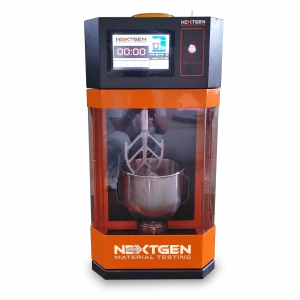
AASHTO T 162 covers the use of a mechanical mixer to prepare hydraulic cement pastes and mortars of plastic consistency. It is commonly referenced as the standardized “mixing procedure” behind cement and mortar testing workflows where repeatable specimen preparation matters.
If you need help aligning your mixer type, speed control, and accessories to the edition cited in your project documents, talk with our team and we’ll help you map the standard to a practical lab setup.
AASHTO T 162: Mechanical Mixing of Hydraulic Cement Pastes and Mortars of Plastic Consistency
This standard is used to standardize how cement paste and mortar are mechanically mixed so results from downstream tests are less affected by operator technique. In practice, it functions as a controlled preparation step that supports other cement and mortar test methods.
Quick Definition
AASHTO T 162 defines a repeatable mechanical mixing approach for hydraulic cement pastes and mortars of plastic consistency, using specified mixer characteristics and a prescribed mixing sequence.
What This Standard Covers
AASHTO T 162 focuses on the mechanical mixing process itself rather than measuring a strength or durability property.
Primary focus: Consistent preparation of cement paste and mortar batches using a mechanical mixer.
Material scope: Hydraulic cement pastes and mortars at plastic consistency (i.e., workable mixes used for specimen preparation and related evaluations).
What it does not do: It does not define acceptance criteria for a material property; it standardizes mixing so subsequent tests start from comparable prepared material.
Why This Standard Matters in Testing
In cement and mortar testing, batch preparation is a major source of variability. AASHTO T 162 is used to reduce variability by controlling the mechanical mixing method, helping labs produce more comparable results when other test methods depend on paste or mortar prepared in a consistent way.
Practical impact: Even when the “main” test is something else, auditors and QA/QC programs may still check that the mixing method and mixer capabilities match the cited standard.
Common Materials, Product Types, or Applications Covered
AASHTO T 162 is most often encountered in laboratories working with cementitious materials where mortar or paste is prepared for later evaluation.
- Portland cement and blended hydraulic cements (paste or mortar preparation)
- Cementitious binders used in transportation and construction materials testing programs
- Lab-prepared mortars used for companion cement test methods that require standardized mixing
Common Test or Verification Workflow
This standard is typically a referenced preparation step rather than a standalone “result-producing” test.
Typical workflow: Batch materials are proportioned and conditioned as required by the primary test method → paste or mortar is mechanically mixed following the prescribed sequence → the mixed material is then used immediately for molding specimens or conducting the primary evaluation.
Quality checkpoints labs often control: mixer type and condition, repeatable speeds/settings, mixing intervals and timing, and consistent use of bowl/paddle and tools.
Equipment Commonly Used for This Standard
Equipment selection for AASHTO T 162 is centered on the mixer’s ability to provide controlled, repeatable mixing consistent with the standard’s requirements and the lab’s batch sizes.
Common equipment: Bench-top mechanical mortar mixer with appropriate bowl and paddle, speed control (as required by the cited edition), and a stable mounting/base.
Common supporting items: Balance/scale for batching, timer, rubber scraper/spatula, and general cement/mortar handling tools.
If you are specifying a mixer for compliance documentation or accreditation, you can request a detailed quote for a configuration matched to the cited edition and your typical batch volume.
How to Read This Designation or Revision
AASHTO citations often include the standard number plus a suffix year indicating the edition (for example, “T 162-22”). Some listings may also show a parenthetical year indicating a later reaffirmation or editorial update (for example, “T 162-16 (2020)”).
Revision sensitivity: Because this standard governs preparation, even small changes to mixer requirements or sequence details can affect equipment suitability and documented procedures. Match your lab procedure to the exact edition cited in your project or agency requirements.
Related Standards, Methods, or Frameworks when useful
AASHTO T 162 is frequently tied to cement and mortar test methods that require mechanically mixed paste or mortar. In many programs, it is also aligned with an ASTM counterpart designation for mechanical mixing.
Practical tip: When a project specification lists both AASHTO and ASTM references, confirm whether the governing document expects one designation explicitly (and whether any agency-specific modifications apply).
Get help selecting a compliant mortar mixer setup
If you are equipping a cement/mortar lab or updating procedures for accreditation, we can help you match mixer capabilities, accessories, and documentation to the exact standard edition you’re working to. To compare options for your batch size and workflow, request pricing for a mixer package.