At first glance, the offer may sound reasonable. The machine looks almost new, the price is far below market, and the seller insists it works perfectly. For many companies, especially under budget pressure, the savings seem too good to pass up.
But testing equipment is not something you can cut corners on without consequences. It’s not a secondary tool. It’s the foundation of quality control. When testing fails, mistakes follow, often with much greater impact.
At NextGen Material Testing, we work with clients who face this every day. Some bought discounted machines that appeared reliable at first. Later, the problems started. Readings turned out to be false. Test results were rejected. In some cases, entire production lots were compromised.
This article explains why buying cheap testing machines often leads to much bigger costs later. We’ll walk through four common problems that appear with this kind of equipment. Each one is based on real cases, not theory.
What People Usually Mean by “Cheap Testing Machines”
In most cases, the term cheap testing machines refers to equipment purchased well below average market price. Sometimes it’s slightly cheaper than standard. Often it’s priced at the very bottom of the range. On the surface, it looks like a good deal. In practice, the low price usually comes with trade-offs.
These machines often fall into predictable categories:
- Used equipment with no clear service records or calibration logs
- Units sold without maintenance agreements or long-term technical support
- Devices from unknown brands, often with no listed manufacturer or verified specs
- Older machines marketed as “like new,” with hidden wear or outdated components
- Testers sold without certification documents or quality verification paperwork
In listings, they tend to come with vague phrases like “fully functional” or “lightly used.” The packaging sounds reassuring. The risk lies inside.
Many of these systems are brought in through liquidation resellers, auctions, or secondary vendors. By the time problems show up, the original contact is long gone, and there’s no support in place to handle repairs or replacements.
Common Pitfalls When Choosing Cheap Equipment
There are many ways a low-cost machine can go wrong. But in practice, four issues show up more often than the rest. These are the problems that tend to surface across labs, factories, and testing workflows, regardless of the specific machine or supplier.
The next sections take a closer look at each one, with clear examples from real testing environments.
Hidden Inaccuracies and Drift
Cheap machines often appear functional at first. Displays respond, sensors initialize, and the system runs through its cycles without error messages. But inside, key components may be worn, outdated, or poorly calibrated. The most common issue is sensor drift: gradual shifts in measurement accuracy that worsen over time and remain invisible without proper diagnostics.
Drift affects different machines in different ways. In hardness testers, for example, the indenter might apply inconsistent pressure due to faulty load cells. Results vary depending on ambient temperature or vibration. In impact testers, energy readings can fluctuate if the hammer mechanism has not been recalibrated after prolonged use. These issues typically do not trigger system alerts, so operators continue testing, unaware that results are becoming less reliable.
Tensile testers are especially vulnerable. If a load cell is out of spec by even a few percentage points, the system may report that a sample with substandard elongation passed the test. These samples move on to production. A bolt, bracket, or beam stamped as compliant may later fail in real-world use, creating liability risks and product recalls.
Drift can start within weeks of purchase if the machine lacks internal diagnostics or auto-verification features. Without a structured calibration schedule, it continues silently until a third-party audit or failure event exposes the problem. By then, the damage is often systemic: flawed batches, rejected certifications, and client complaints.
In every case, the underlying issue traces back to one thing: inaccurate data accepted as valid. Once that happens, every process that depends on the data becomes unreliable.
Lack of Calibration and Verification
Without regular calibration, no test result can be trusted. Accuracy becomes an assumption rather than a fact. This is one of the most common problems with low-cost machines, especially those that arrive without traceable calibration records or access to proper verification tools.
Hardness testers are a clear example. These systems rely on precise control of indenter force and dwell time. If the indenter mechanism wears down or its movement shifts by even a small margin, the readings begin to drift. But without calibration blocks and certified procedures, the deviation goes unnoticed. Parts continue to pass inspection based on flawed data.
In impact testers, lack of calibration shows up through energy losses in the pendulum swing or improper alignment of the striking edge. Machines that were accurate years ago may now record inconsistent values, especially if components have loosened or sensors have aged. These shifts won’t be visible unless periodic verification is built into the lab routine.
Certain industries, like aerospace, automotive, and medical manufacturing, have zero tolerance for this kind of uncertainty. Certification bodies expect documented calibration at set intervals, using traceable standards. When labs can’t produce those records, results are rejected. For production plants, that can mean scrapped inventory, audit failures, or regulatory warnings.
No Spare Parts, No Service, No Support
When a key component fails in a testing machine, the consequences are immediate. Without access to parts or qualified support, the system becomes unusable. What was once a functioning unit turns into a dead asset, sitting idle in the lab while production schedules move forward without it.
This is common with low-cost machines that come from unknown or non-domestic brands. Sellers often disappear after the sale, leaving no clear path for ordering spare parts, booking service, or diagnosing failures. Even routine breakdowns, such as a motor failure in the grip system of a tensile tester or a worn-out actuator in a hardness unit, can take machines offline for weeks.
Consider a case where the motor driving the specimen grips malfunctions. If the supplier cannot provide a replacement or wiring schematic, the machine remains out of service. Local repair shops may not have the specs or tools to intervene. The longer the delay, the higher the cost in lost time, missed deadlines, and canceled test runs.
The risk grows when the failure occurs during critical timelines. Testing machines often operate on tight schedules, especially in labs preparing for audits, certifications, or new product launches. A machine without documented support can’t be fixed in time. Instead of functioning as a reliable tool, it becomes a bottleneck.
Worse yet, temporary fixes or improvised replacements introduce new risks. If a component is substituted without proper compatibility checks, the machine might restart, but it won’t be working to spec. And with no one to validate the change, test results are no longer dependable.
System Fails When It Matters Most
Cheap testing machines tend to hold up during routine use. They may pass basic tests and produce results that seem consistent. But the real test comes during high-stakes moments—audits, certification trials, client inspections, or production ramp-ups. And that’s when many of these systems break down.
One lab reported a failure in their impact tester during a client validation session. The pendulum failed to release properly. The test had to be restarted twice. The client lost confidence, delayed their project, and renegotiated the supply terms. That single malfunction cost the lab both reputation and revenue.
Another case involved a machine that produced false OK results on structural components. The equipment was never verified after purchase, and its readings were assumed to be correct. Months later, parts failed during field use. An investigation traced the issue back to flawed testing. The supplier faced financial penalties and formal liability claims.
In regulated sectors, these events carry even more weight. One breakdown during a certification run can void a product line or stop a launch. If the machine has no documentation, no calibration trail, or no service record, there’s no way to defend the results.
When equipment fails at the worst possible moment, the damage is rarely limited to downtime. It extends into client trust, regulatory standing, and contractual obligations. That risk often far outweighs the money saved during purchase.
How “Cheap” Becomes Expensive
The upfront price might look appealing, but the costs start piling up soon after the machine enters use. Retests, downtime, rejected parts—these are all hidden expenses that don’t appear on a quote but hit hard once operations begin.
When test results are unreliable, teams are forced to repeat procedures to confirm accuracy. That means more labor hours, more material waste, and slower delivery timelines. If bad data slips through, the cost grows. Replacing flawed components after production is expensive. Doing it under contract deadlines is worse.
Legal risks are also real. Incorrect test protocols can lead to product recalls, contract penalties, or even lawsuits if a failure causes damage or injury. Certification bodies reject results that lack traceability. Clients cancel orders when validation fails. Each of these outcomes has a direct financial impact.
Then comes reputation. In industries where safety and precision are non-negotiable, credibility matters. Labs that submit flawed test reports, or fail during client audits, lose trust.
Think Long-Term — Not Just Upfront Cost
In material testing, there’s no room for chance. Each machine directly affects quality control, certification, and client deliverables. Choosing equipment based only on price introduces unnecessary risk into every step of the process.
A testing lab relies on stability. That means machines must stay accurate, repeatable, and traceable over time. Systems with no support plan or spare parts become unreliable the moment something goes wrong. When verification fails or test data is challenged, the entire workflow stalls.
Reliable equipment helps avoid retesting, delays, and client pushback. It protects throughput. It allows teams to focus on results, not damage control. Equipment that stays within tolerance, with traceable service history and access to proper support, saves money by preventing problems before they start.
Upfront savings can seem attractive. But low-cost machines often bring hidden expenses later: failed inspections, rejected batches, missed deadlines. Choosing equipment with verified accuracy and full documentation isn’t a luxury. It’s a practical step that keeps testing stable and protects every decision based on that data.
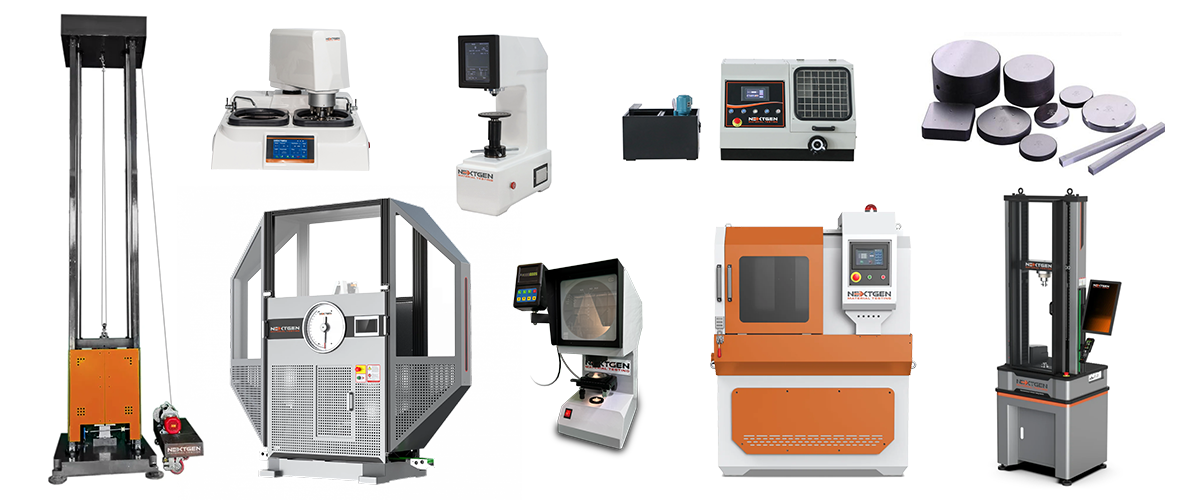
Regardless of the types of tests you run, the materials you work with, or the specifications you need to meet, NextGen Material Testing supplies systems built for diverse technical needs and certification standards. From high-volume production labs to specialized validation environments, we help teams choose equipment that performs reliably, day after day.
If you’re planning to upgrade, verify, or purchase testing equipment, or if your lab is preparing for accreditation, we’re here to support that process. Get a quote or contact us directly — we’ll help you find the right setup and answer any questions along the way.