CNC machines are useful for their precision and unique applications. They’re extraordinarily accurate, beneficial and capable of a number of exclusive tasks. however, the key to their success is the Mach4 software. This solution gives all the key stats, tools and platforms needed to utilize the outcomes and combine them with some other protocols or output requirements. This is why the Mach4 software program is both crucial and beneficial.
Particularly, the TensileMill CNC Mach4 software affords extraordinarily brief and accurate entry to all the one-of-a-kind programmed specimen sizes, making tensile prep an awful lot quicker. Facilities may additionally create custom designed specimen sizes or the industry specific specimen sizes that are with the use of the software. That reduces the time and price of the general process, which enables to produce greater earnings for the firm. This has revolutionized the market and is currently dominating the competition.
The Mach4 has a completely unique Carbon software interface and the effective CNC manage system that has many distinct functions and features. it’s far well-crafted and integrates easily with the tensile software and CNC machining necessities. This gives the machine a rank of a hybrid unit.
Even though the operation may seem complex, the tool may be utilized by any kind of professional, irrespective of level of engineering experience. Learning to apply the machine is straightforward to with a single day of training and installation instructions.
Due to these marked enhancements, the TensileMill CNC Mach4 holds the competitive advantage. It is simply a better machine for any enterprise. Contact us nowadays to find out about the effective software program features that come standard with our tensile sample preparation machines.
Keep Reading in Round Tensile Specimen Preparation Machines
See the Round Tensile Specimen Preparation Machines range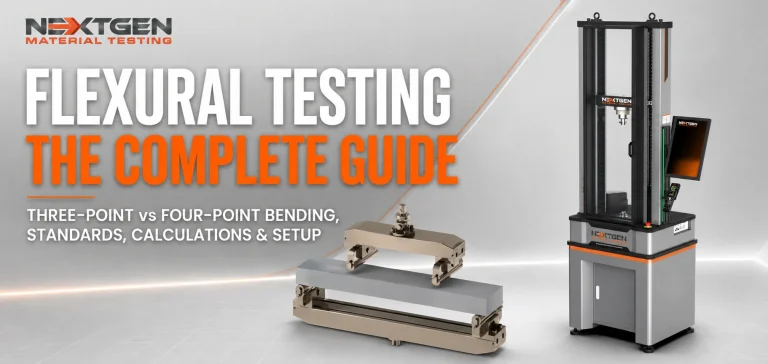 Flexural (Bend) Testing Explained: 3-Point vs 4-Point, Standards, and SetupFlexural (bend) testing explained: what it measures, three-point vs four-point setups, the standards for plastics, metals, composites and concrete, and how to choose the right fixtures and...Read the articleGenTest Software Setup Guide for NextGen NG-EML Universal Testing MachinesGenTest setup affects the full UTM testing workflow: method storage, PC-to-controller communication, user permissions, simulation files, live data acquisition, and report output. This guide follows the GenTest setup video step by step for NextGen NG-EML electromechanical universal testing machines. It covers installation, license activation, workspace configuration, UTM controller connection, safety and peripheral setup, user management, DEMO Mode, simulation files, Control Panel setup, Quick Test, and test method creation. GenTest is the software layer where the test method, machine connection, operator input, live data, calculated results, and report output come together. For operators, service teams, QA/QC labs, and R&D users, the goal is to...Read the articleBrinell, Rockwell, Vickers, or Microhardness: Which Test Makes Sense for Your Application?Choosing a hardness test starts with the part itself. Material type, section thickness, geometry, surface condition, inspection purpose, and required testing speed all affect which method will produce a reliable result. Brinell, Rockwell, Vickers, and microhardness methods work differently, so they are not equally suitable for the same component or the same quality task. Brinell, Vickers, and Knoop are based on the size of an indentation, while Rockwell is based on indentation depth. That difference directly affects how the result is obtained and where the method fits best. In production and lab work, problems usually appear when the test method does not fit the application. A part may be too thin for the selected load, the surface may be too rough...Read the articleSpecimen Size Effects in Charpy Testing: What Engineers Need to KnowCharpy V-notch testing remains widely used because it offers a standardized and efficient way to evaluate impact behavior in metallic materials. In production, qualification, and failure analysis work, it is often used to compare toughness response across temperatures, material conditions, and product forms. The standard Charpy specimen measures 10 × 10 × 55 mm, but that geometry is not always available in practice. Thin sections, weld zones, heat-affected zones, and limited extraction volumes often make full-size specimens impractical. ISO 148-1 addresses this directly by permitting sub-size specimens when a standard specimen cannot be produced, including reduced-thickness options such as 7.5 mm, 5 mm, and 2.5 mm. That change affects more than the...Read the articleHow to Choose the Right Impact Specimen Cooling Temperature ChamberChoosing an impact specimen cooling temperature chamber is not a question of chasing the lowest number on a specification sheet. In real lab conditions, the better chamber is the one that brings specimens to the required temperature, keeps that temperature stable, and fits the transfer routine to the impact tester without creating avoidable variation. That distinction matters because impact results are temperature-sensitive, especially when testing programs move away from ambient conditions or into the ductile-to-brittle transition range. For most buyers, the mistake starts with oversimplification. A chamber that can reach an ultra-low setpoint still may not be the right choice if the control band is too loose, the conditioning medium is poorly...Read the articleGenChamber Review: Cooling and Heating Chamber for Impact SpecimensHow can engineers be certain that an impact test tells the full story about a material’s performance? The answer often lies in how the specimens are prepared before the pendulum ever strikes them. Temperature has a powerful effect on metals: a sample chilled to subzero conditions can fracture suddenly, while the same material at elevated temperatures may bend or deform without breaking. If specimens are not conditioned correctly, test results can vary and may not reflect the real performance of the material. That is why the GenChamber was developed. It is a specialized cooling and heating chamber developed for the precise preparation of Charpy and Izod impact specimens. In this review, we will walk through what the GenChamber is designed to do, its...Read the articleMeet the New NG-EML Series Electromechanical UTMs from NextGenLooking for a reliable electromechanical universal testing machine that fits your lab’s needs – whether compact and precise or built for heavy-duty performance? At NextGen Material Testing, we’ve just relaunched our NG-EML Series – a refined family of electromechanical UTMs designed to support everything from everyday quality control to advanced materials research. The updated NG-EML lineup brings better control, wider force ranges, improved user safety, and smarter software integration — all in one cohesive platform. In this article, we’ll walk you through what’s new, what each model offers, and how these systems can support your team’s testing workflow. If you’re curious about what’s possible with our newest generation of UTMs, keep reading....Read the article
Machines Behind This Article
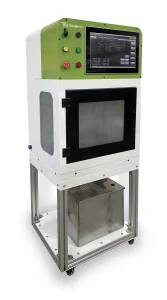 Flat Tensile Specimen Preparation MachinesTensileMill CNC MICRO – Flat Tensile Specimen Preparation MachineTensileMill CNC MICRO is a compact 2-axis machine for preparing flat tensile and impact specimens in-house. Designed for metals, plastics, and composites, it...View product
 Round Tensile Specimen Preparation MachinesTensileTurn CNC Classic Upgrade – Round Tensile Specimen Preparation MachineTensileTurn CNC Classic Upgrade is a compact CNC lathe for accurate, repeatable preparation of round tensile specimens. It supports specimen diameters up to 1.5...View product
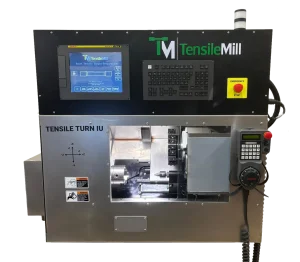 Round Tensile Specimen Preparation MachinesTensileTurn CNC Industrial Upgrade – Round Tensile Specimen Preparation MachineTensileTurn CNC Industrial Upgrade is a compact CNC lathe for preparing standardized round tensile specimens in laboratory and production environments. Guided...View product
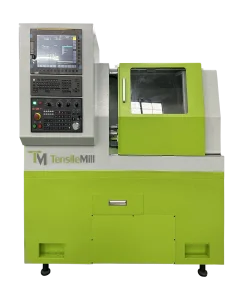
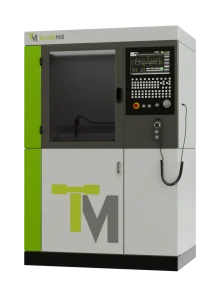 Flat Tensile Specimen Preparation MachinesTensileMill CNC Classic Upgrade – Flat Tensile Specimen Preparation MachineTensileMill CNC Classic Upgrade is a hybrid CNC specimen preparation system for machining flat tensile and Charpy/Izod impact specimens in-house. It combines...View product
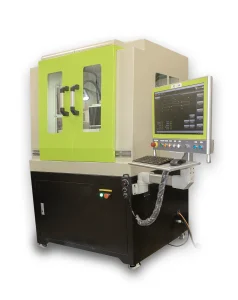 Flat Tensile Specimen Preparation MachinesTensileMill CNC MINI – Compact Flat Tensile Specimen Preparation MachineTensileMill CNC MINI is a compact flat tensile specimen preparation system for laboratories that need in-house CNC machining without a large industrial footprint....View product
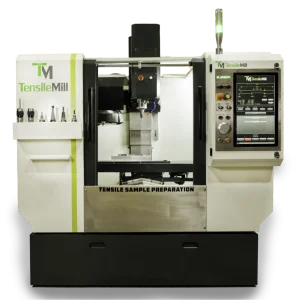 Flat Tensile Specimen Preparation MachinesTensileMill CNC XL – Flat Tensile Specimen Preparation MachineTensileMill CNC XL is a high-capacity flat tensile specimen preparation machine for laboratories and production floors handling larger or tougher materials. It...View product
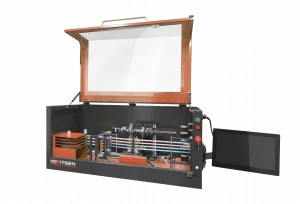 Tensile Sample PreparationNG-AutoPol – Automatic Longitudinal Polisher for Tensile SpecimensNG-AutoPol is an automatic longitudinal polishing system for metallic tensile and fatigue specimens. It removes machining marks, grinding stress, and residual...View product
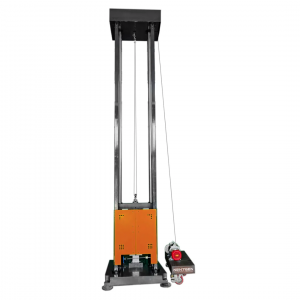 Metal TestingDWT-1800 – Computer-Controlled Drop Weight Impact TesterDWT-1800 is a computer-controlled drop weight impact testing machine for evaluating impact resistance in metal and non-metal materials. Capable of high-energy tests...View product
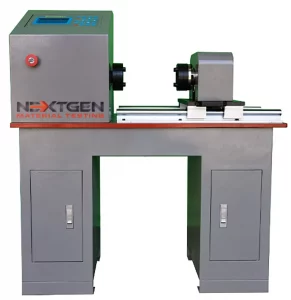 Metal TestingGenTor – Horizontal Torsion TesterNextGen GenTor is a horizontal torsion tester for measuring torque, torsion angle, deformation, and torsional strength in metals and components. With capacity...View product
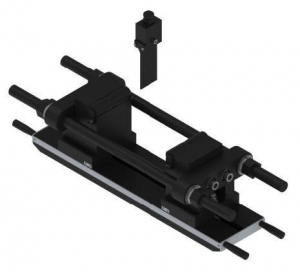 Metal TestingHeavy-Duty Bending Fixtures for Hydraulic Flexural TestingHeavy-duty bending fixtures support high-force flexural testing of metals, composites, ceramics, reinforcing bars, and structural materials on hydraulic universal...View product
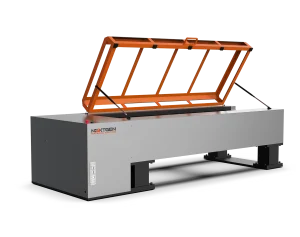 Metal TestingNG-EML Series H – Horizontal Universal Testing MachineNG-EML Series H is a horizontal universal testing machine line for tensile, proof load, elongation, and breaking force testing of long or difficult-to-handle...View product
 Metal TestingNG-FLX Series A – Flexural and Bend Testing SystemNG-FLX Series A is an electromechanical flexural and bend testing system for controlled sheet metal bending, three-point bend testing, flattening tests, ductility...View product