The preparation of metallographic samples is an important step in material testing, requiring precision, efficiency, and reliability in order to produce accurate results. Choosing the right equipment for this task can be challenging, especially when laboratories and production facilities require tools that not only meet industry standards but also optimize workflow. The wrong choice can lead to inefficiencies, inconsistent results, and increased costs.
At NextGen Material Testing, we understand these challenges and provide the right solution. Our GenPress MFA Series of fully automated mounting presses addresses the unique needs of modern laboratories and production environments. Combining advanced technology, user-friendly interfaces, and durable construction, these systems are engineered to provide smooth, reliable performance for metallographic sample preparation.
Our goal in this article is to introduce you to the three standout models in the GenPress MFA Series: the GenPress MFA MOT, the GenPress MFA Dual HYD, and the GenPress MFA HYD. In addition to providing unmatched precision and versatility, each product is designed to meet specific requirements. Now let’s explore their features and discover how they can be beneficial to your business.
GenPress MFA MOT – Fully Automatic & Motorized
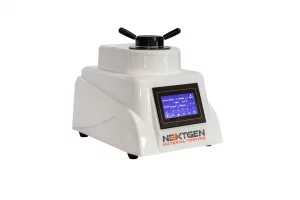 To begin with, let us take a closer look at the GenPress MFA MOT, a state-of-the-art fully automatic motorized mounting press developed for precise metallographic sample preparation. This model is equipped with a 7-inch touchscreen interface, allowing users to easily configure and save up to 100 operator-created programs for heating, cooling, and cycle timing. The intuitive interface guarantees that even complex tasks can be performed easily.
One of the key highlights of the GenPress MFA MOT is its motorized pressure application system, which delivers consistent compression for a broad range of sample sizes. This system supports molds ranging from 1–2 inches (25–50mm) and can produce up to two samples per cycle with optional spacers. Customized mold sizes further increase its adaptability to many laboratory requirements.
The integrated cooling system, with optional chiller support, significantly reduces preparation time, increasing efficiency without compromising quality. Additionally, its compact design, weighing just 132 lbs (60 kg), allows it to be a perfect fit for laboratories with limited space, while maintaining robust performance.
Built with a high-quality ABS shell, the GenPress MFA MOT is not only aesthetically modern but also durable and easy to maintain. Its dual-mode operation—both manual and automatic—provides users with complete control over the process, allowing it to be a cost-effective and versatile choice for laboratories looking to optimize their workflow.
GenPress MFA Dual HYD – Fully Automatic Dual Hydraulic Mounting Press
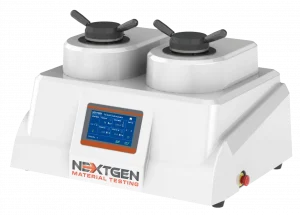 Next, let’s explore the GenPress MFA Dual HYD, a powerful upgrade in the GenPress MFA Series, ideally suited to laboratories that demand higher throughput and precision. Unlike the GenPress MFA MOT, which uses a motorized system, the Dual HYD features a dual hydraulic system capable of producing up to 4 samples per cycle.
Another standout feature of the Dual HYD is its ability to handle an extensive range of applications. It also supports mold sizes from 1–2 inches (25–50mm), with customizable options to suit specific laboratory requirements. Its integrated cooling system, with optional chiller compatibility, allows for faster sample preparation, further boosting efficiency.
Weighing 209 lbs (95 kg), the GenPress MFA Dual HYD is larger and more robust than the MFA MOT, lending itself to high-volume production. Despite its expanded capabilities, it remains user-friendly and easy to maintain, thanks to its high-quality ABS shell and thoughtfully engineered design.
GenPress MFA HYD – Fully Automatic Hydraulic Mounting Press
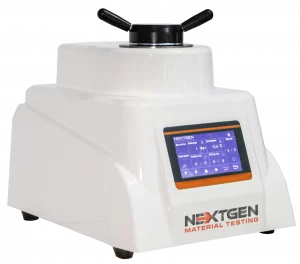 Lastly, let’s look at the GenPress MFA HYD, a compact and efficient solution within the GenPress MFA Series. This model combines the precision of a hydraulic system with a design optimized for smaller laboratories or facilities with moderate testing needs. While it shares similarities with the Dual HYD, such as its closed-loop hydraulic process and support for multiple mold sizes, the MFA HYD is configured for a more simplified workflow, focusing on producing 1–2 samples per cycle.
Due to its silent hydraulic operation, it maintains an undisturbed and professional laboratory environment, much like the Dual HYD, but in a more compact and lightweight package. It may not be as powerful as the Dual HYD with its dual hydraulic capacity, but it is designed and engineered to fulfill the needs of smaller-scale operations with its compact design and high-performance features.
Choosing the Right Mounting Press for Your Needs
The GenPress MFA Series stands out as a reference to precision, innovation, and efficiency in metallographic sample preparation. Whether you are operating a high-throughput laboratory or a small facility with specialized requirements, this series offers a solution tailored to meet your specific needs. From the motorized precision of the GenPress MFA MOT to the dual hydraulic power of the GenPress MFA Dual HYD, and the compact efficiency of the GenPress MFA HYD, these systems are engineered to optimize workflow, achieve consistent results, and provide exceptional reliability.
Each model in the GenPress MFA Series is thoughtfully engineered to address unique challenges in metallographic sample preparation. By integrating advanced technology with user-friendly designs, these mounting presses simplify operations, save time, and reduce errors. Laboratories and production facilities can rely on the GenPress MFA Series to maintain the highest standards in material testing while optimizing their resources.
At NextGen Material Testing, Inc., we are committed to helping you choose the best and most suitable material testing equipment for your specific applications. If you have questions or would like more details about our products, please do not hesitate to contact us directly or request an online quote. We are here to help you find the most suitable solution to your testing needs.
Keep Reading in Mounting Press System for Metallography
See the Mounting Press System for Metallography range Flexural (Bend) Testing Explained: 3-Point vs 4-Point, Standards, and SetupFlexural (bend) testing explained: what it measures, three-point vs four-point setups, the standards for plastics, metals, composites and concrete, and how to choose the right fixtures and...Read the articleGenTest Software Setup Guide for NextGen NG-EML Universal Testing MachinesGenTest setup affects the full UTM testing workflow: method storage, PC-to-controller communication, user permissions, simulation files, live data acquisition, and report output. This guide follows the GenTest setup video step by step for NextGen NG-EML electromechanical universal testing machines. It covers installation, license activation, workspace configuration, UTM controller connection, safety and peripheral setup, user management, DEMO Mode, simulation files, Control Panel setup, Quick Test, and test method creation. GenTest is the software layer where the test method, machine connection, operator input, live data, calculated results, and report output come together. For operators, service teams, QA/QC labs, and R&D users, the goal is to...Read the articleMetallography Sample Preparation Equipment: How to Improve Accuracy from Cutting to Final AnalysisAccurate metallographic analysis starts before the specimen reaches the microscope. Cutting, mounting, grinding, and polishing all influence whether the final surface reflects the material’s true structure or carries preparation-related damage. Excess heat, weak edge support, inconsistent pressure, poor abrasive progression, and unstable polishing conditions can all introduce artifacts that affect interpretation. Well-matched metallography sample preparation equipment helps control these risks across the full workflow. By improving sectioning control, mounting stability, and grinding and polishing repeatability, labs can produce more consistent specimens and reduce the chance that preparation defects are mistaken for real material features. Why...Read the articleBrinell, Rockwell, Vickers, or Microhardness: Which Test Makes Sense for Your Application?Choosing a hardness test starts with the part itself. Material type, section thickness, geometry, surface condition, inspection purpose, and required testing speed all affect which method will produce a reliable result. Brinell, Rockwell, Vickers, and microhardness methods work differently, so they are not equally suitable for the same component or the same quality task. Brinell, Vickers, and Knoop are based on the size of an indentation, while Rockwell is based on indentation depth. That difference directly affects how the result is obtained and where the method fits best. In production and lab work, problems usually appear when the test method does not fit the application. A part may be too thin for the selected load, the surface may be too rough...Read the article
Machines Behind This Article
Mounting Press System for MetallographyGenPress MFA Dual HYD – Fully Automatic Dual Hydraulic Mounting PressGenPress MFA Dual HYD is a fully automatic dual hydraulic mounting press for higher-throughput metallographic sample mounting. It can produce up to four samples per...View product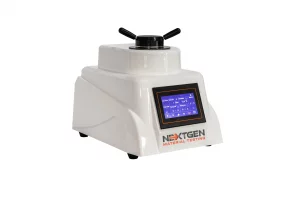 Mounting Press System for MetallographyGenPress MFA MOT – Fully Automatic Motorized Mounting PressGenPress MFA MOT is a fully automatic motorized mounting press for compression mounting of metallographic samples before grinding, polishing, and microscopic...View productMounting Press System for MetallographyGenPress MFA HYD – Fully Automatic Hydraulic Mounting PressGenPress MFA HYD is a fully automatic hydraulic mounting press for preparing metallographic samples before grinding, polishing, and microscopic inspection. It...View product
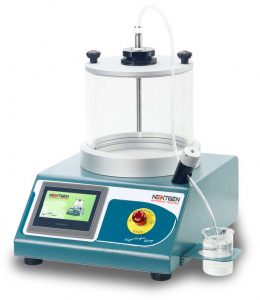 Mounting Press System for MetallographyGenVac MP3 Series – Vacuum Impregnation System for Epoxy MountingGenVac MP3 is an intelligent vacuum impregnation system for epoxy mounting of porous metallographic specimens. It supports up to 99 degassing cycles, eight stored...View product
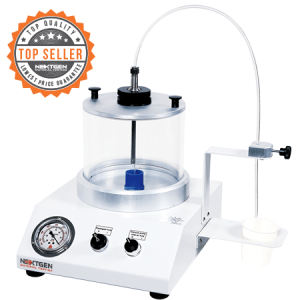 Mounting Press System for MetallographyGenVac MP Series – Vacuum Impregnation System for Epoxy MountingGenVac MP Series is a vacuum impregnation system for epoxy cold mounting of porous metallographic specimens. Designed for rocks, minerals, ceramics, circuit boards,...View product
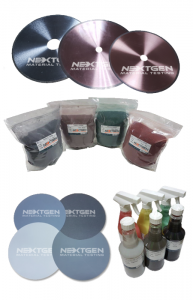 Mounting Press System for MetallographyMetallography ConsumablesMetallography consumables cover the materials needed for sectioning, mounting, grinding, polishing, etching, and cleaning specimens before microscopic examination....View product