SATRA TM60 is a footwear-industry test method for assessing how a polymeric material resists the growth of a pre-cut slit when the specimen is repeatedly flexed through a defined angle. It is commonly used to compare soling compounds and constructions for durability and crack-propagation risk.
TM60 is most often associated with Ross-type flexing equipment and is frequently specified in R&D, incoming material approval, and production quality control for outsole and soling sheet materials. If you need help aligning an internal requirement to the correct TM60 edition and temperature condition, you can talk with our team.
SATRA TM60 Ross flex test – resistance to cut growth on flexing
SATRA TM60 is a dedicated flexing and cut-growth assessment method used primarily for footwear soling polymers. The output is typically reported as a cut growth rate over flexing cycles, supporting material selection and durability benchmarking.
Quick definition
Standard type: Test method.
What it measures: Resistance of a polymeric material to propagation of a cut during repeated flexing.
Commonly used for: Comparing outsole/soling materials and monitoring batch-to-batch consistency.
What this standard covers
SATRA TM60 evaluates cut growth by introducing a narrow cut through the full thickness of a rectangular test piece and then flexing the specimen repeatedly about the cut location. The test continues until a defined cut-growth endpoint is reached or a specified maximum number of flexes has been completed, after which an average cut growth rate is calculated.
The method is intended for polymeric flexible materials, with particular relevance to footwear solings. It is not intended for leather, and some material types and constructions may be called out as unsuitable or requiring special consideration within the method.
Why this standard matters in testing
Crack initiation and crack growth under flexing are common durability failure modes for soles and flexible polymer components. TM60 provides a repeatable way to rank materials and formulations by their tendency to propagate a cut under cyclic bending, supporting design decisions and corrective actions when cracking is observed in wear or in durability screening.
Because TM60 is often used for comparative assessment, controlling specimen thickness, notch/cut preparation, flexing conditions, and test temperature is critical for meaningful results—especially when trending performance across suppliers, colors, or compound revisions.
Common materials, product types, or applications covered
Common materials: Polymeric soling materials (for example, polyurethane and other thermoplastic or crosslinked soling compounds commonly used in footwear).
Common product forms: Soling sheet materials, moulded sole units, and larger sole sections/foreparts when the procedure allows.
Typical use cases: Footwear outsole development, supplier qualification, hydrolysis-risk screening for certain polymers when tested under appropriate conditions, and routine QC checks tied to durability targets.
Common test or verification workflow
TM60 is typically used as a comparative durability screen rather than a pass/fail certification test. A common workflow is to condition specimens (and, where required, apply any pre-treatments), introduce the specified cut, run cyclic flexing to the required endpoint, and report cut growth versus cycles as a rate.
Common workflows: Material down-selection, compound change control, production batch release checks, and troubleshooting when flex cracking or cut propagation is seen in field wear.
Equipment commonly used for this standard
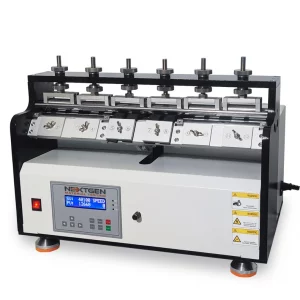
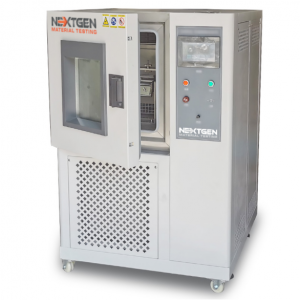
TM60 is commonly run on a Ross-type flexing machine that repeatedly bends the specimen through a defined angle while allowing controlled movement of the free end so the specimen bends around a mandrel without being intentionally stretched. In practice, this points to a dedicated Ross flexing tester with the appropriate clamps, rollers/supports, cycle counter, and temperature capability when required.
Common equipment: Ross flexing tester (often referenced in SATRA contexts as a Ross flexing machine), specimen cutting and thickness control tools, and measuring tools for tracking cut growth over the test.
If you are selecting a Ross flexing system for TM60—especially if you need low-temperature capability or higher specimen throughput—you can request a detailed quote for a configuration matched to your specimen type and reporting needs.
How to read this designation or revision
Designation: “SATRA TM60” identifies the specific SATRA test method number.
Revision sensitivity: TM60 is revised periodically, and the cited edition (often shown with a month/year or a year in specifications) can affect details such as specimen preparation allowances, thickness requirements, conditioning or treatment options, and the exact endpoint and reporting format. For purchase specifications and compliance reporting, match your lab procedure to the exact edition referenced in the customer or product requirement.
Related standards, methods, or frameworks
TM60 is commonly used alongside other SATRA soling material methods to build a fuller durability profile (for example, methods covering thickness/effective thickness and density when those properties are needed to prepare standardized specimens). In some programs, alternative SATRA flex-based cut-growth methods may be specified depending on whether the test is being run on a material strip versus a complete outsole or a component with tread/pattern features.
Commonly paired SATRA references: SATRA TM136 (thickness/effective thickness of soling materials and sole units) and SATRA TM134 (density by volume displacement) when specimen thickness control and material characterization are part of the test plan.
Get help with SATRA TM60 setup and equipment selection
If you need TM60 testing capability in-house, the most important decisions are usually specimen format (sheet vs. sole sections), temperature requirements, station count/throughput, and how your team will measure and report cut growth consistently. To review your requirement and pricing options, you can request pricing for a Ross flexing tester setup.