ISO 1183:1987 is a legacy International Standard that describes laboratory methods used to determine the density (and relative density) of non-cellular plastics.
Density testing to ISO 1183 is commonly used for material identification, incoming material verification, formulation control, and QA/QC trending where small shifts in density can indicate changes in composition, crystallinity, or void content.
ISO 1183:1987 — Plastics — Methods for determining the density and relative density of non-cellular plastics
ISO 1183:1987 is focused on determining density for plastics that are not cellular (i.e., not foam). It addresses multiple density-determination approaches so laboratories can match the method to the specimen form (finished part, pellets, powder, small pieces) and the accuracy needed.
Status note: ISO 1183:1987 is withdrawn. Many current procurement and test plans instead cite the newer ISO 1183 series parts (for example, part-specific methods for immersion/pycnometer/titration, density gradient column, and gas pycnometer). If you are unsure what your requirement intends, contact our team so the lab setup, liquids, and reporting basis match the correct edition and method.
Quick Definition
ISO 1183 is a density test-method standard for non-cellular plastics, describing several recognized laboratory approaches (by immersion, pycnometer, titration, and density gradient column) to calculate density (and relative density) from mass and volume relationships.
What This Standard Covers
ISO 1183:1987 specifies four methods for determining density for plastics (excluding cellular plastics). These methods are intended for different specimen forms and measurement scenarios.
| Method | What it is (high level) | Typical specimen form |
|---|---|---|
| A | Immersion method | Finished parts / solid specimens |
| B | Pyknometer method | Powders, granules, pellets, flakes |
| C | Titration method | Specimens suitable for immersion, including pellets |
| D | Density gradient column method | Small samples; comparisons and sorting by density |
Why This Standard Matters in Testing
Density is a fast, widely understood physical property used to compare lots, screen for contamination or formulation drift, and support material traceability. It is also commonly used alongside melt flow, DSC, ash/filler checks, and mechanical tests to build confidence that material and process are under control.
For equipment selection and test planning, the key practical point is that ISO 1183 allows different method paths depending on whether you are measuring a finished part, a small cut piece, or raw material forms like pellets and powders.
Common Materials, Product Types, or Applications Covered
ISO 1183:1987 is used with non-cellular plastics across common polymer families when a density value is needed for verification or comparison.
Common specimen sources: moulded or extruded parts, quality-control plaques, cut samples from production parts, and raw material forms such as pellets/granules/flakes/powders (depending on method choice).
Common Test or Verification Workflow
Most ISO 1183 workflows follow a practical sequence: select the applicable method (A–D) for the specimen form, condition the specimen and measurement liquid(s) as required by the cited procedure, perform mass/volume-related measurements, and report density (and relative density when required) at the specified conditions.
Because density can be sensitive to specimen preparation and voids, purchasers and lab teams typically align on specimen form (finished part vs. raw material), method letter, and the measurement conditions stated in the purchase specification or quality plan.
Equipment Commonly Used for This Standard
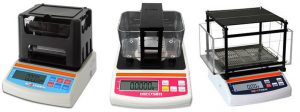
ISO 1183 density determinations are commonly supported by benchtop instruments and accessories rather than a universal testing machine.
Common equipment families: analytical balances (often with density determination kits for immersion work), immersion fixtures and sinkers (as applicable), pyknometers for liquid-based volume determination, density gradient column apparatus with suitable liquids for gradient setup, and temperature control accessories (baths or controlled environments) to keep measurements stable.
If you need help mapping your specimen type (pellets vs. molded parts) to the most practical method and accessory set, you can talk with our team about a lab-ready configuration.
How to Read This Designation or Revision
What “ISO 1183:1987” means: “ISO” identifies the standards body, “1183” is the document number, and “1987” is the publication year for this withdrawn edition.
Practical caution for buyers: requirements that cite “ISO 1183” without a part number can be ambiguous today because newer ISO 1183 documents are published as separate parts (for example, part-specific procedures for immersion/pyknometer/titration, density gradient column, and gas pyknometer). For quoting, planning, or compliance documentation, it is best to confirm the exact method and edition that must be followed.
Related Standards, Methods, or Frameworks
In many plastics test plans, ISO 1183 density testing is paired with other material characterization methods and with product or material specifications that define how specimens must be prepared and what conditions apply.
Commonly referenced successors in the ISO 1183 family: ISO 1183-1 (immersion, liquid pyknometer, titration), ISO 1183-2 (density gradient column), and ISO 1183-3 (gas pyknometer). When a customer requirement references one of these parts, the method-specific equipment and setup can differ.
Get help selecting an ISO 1183 density testing setup
If you are outfitting a lab or standardizing density verification for plastics, you can request a detailed quote for an ISO 1183-oriented setup matched to your specimen form (parts vs. pellets/powders) and the method you need to run.