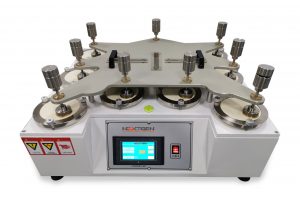
NEXT 18/18A/18B is a retailer-specific testing requirement most commonly associated with Martindale-style abrasion evaluation for textiles and soft materials used in footwear and apparel supply chains.
Because NEXT methods are controlled documents used inside supplier approval and quality programs, the exact setup (variant letter, pressure, abradant, endpoints, and reporting) needs to match the requirement cited on your purchase order or product specification. If you want help mapping a customer callout to the right Martindale configuration, talk with our team.
NEXT 18/18A/18B (Martindale abrasion requirement)
NEXT 18/18A/18B is typically used to define an abrasion-resistance verification step for textile constructions where durability and surface appearance are buyer-critical. In many labs, the equipment pathway aligns with a Martindale abrasion tester and the supporting abradants, loads, and holders needed to run repeatable rub-cycle testing.
Where other public standards may be listed alongside it on equipment datasheets, the NEXT designation is still its own requirement and should be followed exactly as cited in the sourcing document.
Quick Definition
What it is: A private NEXT test requirement used for supplier verification.
Most common lab association: Martindale abrasion testing (rub-cycle durability / appearance change evaluation) on textile and footwear-related materials.
Key buyer detail: The “18”, “18A”, and “18B” variants can imply different setup details—match the exact variant cited in the requirement.
What This Standard Covers
NEXT 18/18A/18B is generally used to drive controlled abrasion exposure using a standardized rubbing motion and defined contact pressure. Test results are commonly used to judge whether a fabric or surface meets an internal durability threshold and/or an agreed appearance-change criterion after a specified number of cycles.
Because this is not a public consensus document, the allowable endpoints (for example, visible wear, breakdown to a hole, mass loss, or a graded appearance change) depend on the exact NEXT method and product category being supplied.
Why This Standard Matters in Testing
In retail supply chains, abrasion performance is often treated as a practical proxy for “in-service durability.” A NEXT 18-series callout can be used to qualify incoming lots, validate process changes, compare material options, or support supplier approvals where a common test language is needed across multiple factories and laboratories.
For QA/QC teams, the biggest risk is running “a Martindale test” that does not actually match the specified NEXT variant—small differences in load, abradant type, backing, conditioning, and evaluation rules can change outcomes and acceptance decisions.
Common Materials, Product Types, or Applications Covered
NEXT 18/18A/18B is commonly applied where textiles and soft materials are exposed to rubbing wear in use.
Common examples: Shoe fabrics and linings, apparel fabrics, coated fabrics, and other textile constructions where surface wear and appearance retention are important.
Common Test or Verification Workflow
Most labs run NEXT 18-series abrasion verification using a Martindale-style instrument that applies a repeatable multi-direction rubbing path under a defined mass/load.
Typical workflow pattern: Condition specimens as required, mount specimens and any required backing material, select the specified abradant, apply the required load/pressure, run to the required cycle count (or inspection intervals), then evaluate wear and document results using the acceptance rules in the cited NEXT method.
Equipment Commonly Used for This Standard
NEXT 18/18A/18B most often points to the Martindale abrasion tester equipment family, plus the consumables and fixtures that control the contact interface and load during rubbing.
| Equipment / item | Why it matters for NEXT 18-series work |
|---|---|
| Martindale abrasion tester | Controls rubbing motion and cycle count; supports repeatable abrasion exposure used for supplier verification. |
| Specimen holders and loading weights | Maintains defined contact pressure; incorrect mass/load is a common cause of non-matching results. |
| Abradants and backing materials (as specified) | The abradant surface and backing stack strongly influence wear rate and appearance change, so they must match the cited method variant. |
If you are configuring a system for a purchasing spec that calls out a specific load, station count, or consumables package, you can request a detailed quote for a Martindale setup matched to that requirement.
How to Read This Designation or Revision
NEXT: Indicates a private retailer requirement used within NEXT’s sourcing and quality programs rather than a public consensus standard.
18 / 18A / 18B: The number identifies the core method family, while the letter suffix indicates a specific variant. The suffix may change test details that affect equipment configuration and consumables (for example, defined abradant, load, backing, inspection intervals, or evaluation criteria).
Revision sensitivity: Always align your setup and reporting to the exact cited edition/issue of the NEXT document referenced by your customer, since private methods can be updated without a public change-history workflow.
Related Standards, Methods, or Frameworks
NEXT 18-series abrasion requirements are frequently run on the same Martindale equipment platform used for other widely recognized abrasion and pilling methods.
Commonly associated Martindale-family references: ISO 12947 (Martindale abrasion), ISO 5470-2 (Martindale abrasion for coated fabrics), ASTM D4966 (Martindale abrasion), and EN ISO 12945-2 (pilling assessment on related Martindale-type equipment), where specified by the customer or test plan.
Discuss your NEXT 18/18A/18B requirement
If you share the exact callout (18 vs 18A vs 18B), target loads/pressures, and any required abradants or backing materials, we can help translate that into an equipment and consumables configuration. For pricing and lead-time options, request a quote.