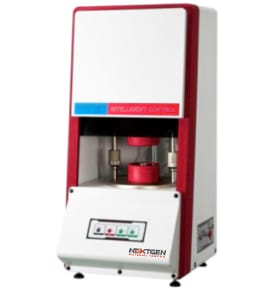
ISO 667:1981 is a legacy ISO test method for rubber compounds that evaluates cure-rate / pre-vulcanization behavior using a shearing-disc instrument (Mooney-type). It is typically used to understand how a compound’s processability changes at an elevated, controlled temperature over time.
ISO 667 is withdrawn and has been revised into the ISO 289 series (notably ISO 289-2 for pre-vulcanization characteristics). If you need help translating a customer or drawing requirement that still cites ISO 667 into a current, testable setup, talk with our team.
ISO 667:1981 — Rubber, compounded — Determination of cure rate — Shearing disk method
ISO 667:1981 is identified by ISO as a shearing-disk method for determining cure rate in compounded rubber. The document is short and historically used in rubber compounding quality control to monitor early vulcanization (scorch) tendencies under controlled test conditions.
ISO identifies ISO 667 as withdrawn, with ISO 289-2 published as the successor document for this type of measurement.
Quick definition
ISO 667 is a legacy rubber-compound test method that uses a shearing-disc (Mooney-type) instrument to track how a compound’s response changes over time at a specified temperature, supporting evaluation of pre-vulcanization behavior and processing safety margin.
What this standard covers
At a practical level, ISO 667 addresses time-dependent behavior of compounded rubber under heat and shear in a closed test chamber using a rotating disc. Results from this style of method are commonly used to characterize how quickly a rubber compound begins to lose processability at elevated temperature (often discussed as “scorch” or pre-vulcanization characteristics).
Because ISO 667 is withdrawn, many laboratories align their day-to-day procedure and reporting to ISO 289-2 when a current ISO reference is required.
Why this standard matters in testing
Pre-vulcanization behavior is directly tied to manufacturability: compounds that begin to cure too quickly can create mixing, calendaring, extrusion, or molding issues and reduce consistency from batch to batch.
When ISO 667 (or its successor references) is called out in a specification, it typically indicates that the buyer cares about processing stability at temperature, not just a single-point viscosity number.
Common materials, product types, or applications covered
ISO 667 is associated with compounded rubber materials used in conventional rubber processing operations. It may appear in internal QC plans or supplier requirements where a rubber compound’s tendency to pre-cure during processing needs to be monitored.
Typical use cases: Incoming compound qualification, batch release checks, compound development screening, and troubleshooting for premature curing during processing.
Common test or verification workflow
Workflows tied to ISO 667-style testing are usually structured around controlled heating and timed measurement in a shearing-disc instrument, with the output used to compare lots, detect formulation shifts, or set acceptance limits.
- Select the test temperature relevant to the intended process conditions.
- Run the timed measurement and capture the response trend versus time.
- Report the characteristic time/threshold values required by the calling specification (often aligned to ISO 289-2 conventions in modern reporting).
Revision sensitivity: Because ISO 667 is withdrawn, the most important workflow decision is identifying the intended modern replacement (commonly ISO 289-2) and matching the buyer’s required edition and reporting format.
Equipment commonly used for this standard
ISO 667 points to a shearing-disc (Mooney-type) viscometer/consistometer configuration: a heated, closed test cavity with a rotating disc and torque measurement to track time-dependent behavior.
Common equipment: Mooney viscometer (shearing-disc viscometer), temperature-controlled dies/cavity, appropriate rotors/discs as required by the applicable procedure, and software/data capture for time-based curves and characteristic times.
If you are comparing instrument configurations (temperature range, rotor options, safety features, data handling, and compliance documentation), you can request pricing for a Mooney-type setup matched to your rubber QC workflow.
How to read this designation or revision
ISO 667:1981 identifies the ISO standard number (667) and the publication year (1981). ISO identifies this document as withdrawn.
Practical interpretation: If a purchase order, internal spec, or legacy drawing still cites ISO 667, it is usually necessary to (1) capture the exact cited year/edition and (2) confirm whether the requirement should be satisfied using the current replacement document (commonly ISO 289-2) and which edition of that replacement is acceptable.
Related standards, methods, or frameworks
ISO 667 has been revised into the ISO 289 series for shearing-disc (Mooney) determinations on rubber. The most common modern companion references are:
- ISO 289-2 for pre-vulcanization characteristics (successor pathway for ISO 667-type requirements).
- ISO 289-1 for Mooney viscosity (used when a single-point viscosity measurement is required rather than a pre-vulcanization time characteristic).
Discuss ISO 667 / ISO 289-2 testing and equipment options
If you need to meet a legacy ISO 667 callout or align a supplier requirement to a current ISO 289-2 edition, contact our team with the exact citation language and your target process temperature so we can help you choose a practical, standards-aligned test approach.