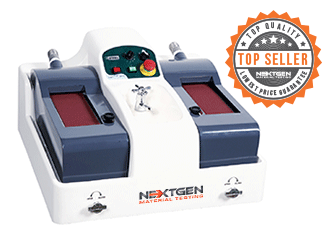
In metallography, grinding is one of the fundamental processes done to study the structures of different materials. The process may be accomplished either manually or mechanically with the use of a grinding wheel, a bench grinder or a belt grinder.
In general, it is a form of cutting mechanism that shapes and removes the surface of the material via an abrasive action. The friction gradually destroys the surface of the material being rubbed. This, in turn, reduces the size of the material and removes corrugations on the surfaces. With the use of high end grinding equipment coupled with expertise, the final product may have precise dimensions and a fine finish.
To make sure that belt grinders are of high quality, here are a few things to look for in a metallography belt grinder system:
-
1. Lightweight and convenient to use
Most commercially available belt grinders are portable and ergonomically designed for tabletop applications. This is important because metallography takes into consideration small minerals and metals that do not need large belt grinders. The maximum sample size for belt grinders usually ranges from 16 to 21 square centimeters. The grinder, on the other hand, should have dimensions of less than 65 cm width, 65 cm length, and 40 cm in height.
The weight of the equipment is also a factor to be considered. Nobody wants the weight of the machine to hinder any process in the laboratory. Hence, for convenience purposes, the ideal weight should be below 55 kilograms. This will allow the metallurgists to easily transport the equipment whenever there is a need to do so.

-
2. Applicable for both wet and dry grinding
It is highly advisable to get equipment on which both wet and dry grinding operations can be performed. It does not only lower the cost of purchasing two separate belt grinders but also make the device compact. It also makes the equipment more accessible and easy to use.
Another thing to look for a quality belt grinder is the number of belts present in the equipment. The GenGrind Belt BT Series is a metallographic dual belt grinder which makes use of two belts. This is one-of-a-kind equipment that allows the performance of two grinding operations at once. The dual belt grinder also bears a faucet located at the middle of the device. This aids in the wet grinding operation and is used to cool the material being grinded. In addition, the faucet is necessary for the removal of dust and debris, and for washing the specimen after grinding.
-
3. Produces low noise
The grinding operation is loud and irritating. The intensity of the sound produced depends on the material and the force applied to it. Soft materials usually produce less irritating sounds than hard materials. A high quality-belt grinder should have a mechanism for noise reduction during operation. It should produce a non-irritating operating sound within the 60 to 70 decibel range. Everybody in the metallography laboratory has their own work to focus on hence noisy equipment are not desirable.
-
4. Easy to clean
To ensure efficient operation, it is necessary that the belt grinder has a mechanism for easy cleaning of the device. This will prevent the small particles to accumulate in the motor and other parts of the device. If the grinder is used for weeks without proper cleaning and maintenance, efficiency will be highly affected.
The metallography dual belt grinder from GenGrind Belt BT series is an example of a high-quality belt grinder with good cleaning mechanism. It has a vacuum connection used for removing dust and debris during operation. This protects the metallurgist from injury caused by the spread of particles in the air
-
5. Has stable torque
A high-quality belt grinder provides stability during operation. Grinding hard materials requires pressure to change their configurations. This force increases the friction between the belt and the material causing the equipment to shake. If the belt grinder is well built, it shall have shock absorbers that absorb the energy from the belt. This reduces the movement of the equipment and makes it stable during operation.
Precision and accuracy are very important for metallurgists. The quality of their works depends not on their skills alone but also on the machine that they use. If the belt grinder is stable, the operation will produce well-cut materials. However, if it is unstable, there is always a big chance for errors to occur.
-
6. Has variable speed that can be easily controlled
A high-quality belt grinder offers variable belt speed levels which should be easily adjustable using a knob or a controller during the grinding procedure. The speed varies depending on the material under consideration. Some grinders may have provisions for speed variation but the change of speed consumes a lot of time to take effect. This causes a delay in the operation and consumes more electricity. Quality grinders have a variable speed between 100 to 1000 rpm that can be adjusted anytime.
-
7. Ease of changing the belt
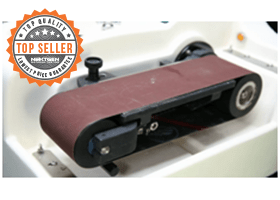
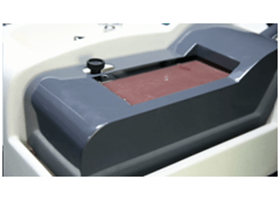
Majority of available belt grinders in the market permit the replacement of belts. However, the ease of doing the replacement varies. High-quality belt grinders allow simple removal and installation of the belt and the cover. This is important since regular belt replacement ensures glitch-free work. In addition, it is also important to ensure that the belt has its own covering to prevent it from acquiring dust and dirt from the environment.
The friction caused by the material weakens the composition of the belt. That is why, after a long, continuous use, the belt loses its ability to create fine surfaces. This causes the belt to produce an unpleasant sound during operation, which is oftentimes irritating to the ear.
-
8. Has an emergency stop button
An emergency stop is a safeguarding measure used to halt a machine from running if it encounters an error. Since belt grinders can harm people by skin abrasions, it is necessary that the machine contains an emergency stop button. This is intended to quickly turn the machine off and cut the electricity flowing through it. If the motor begins to overheat, the emergency stop button will prevent the machine from acquiring serious damages.
The safety of the metallurgist or operator is one of the things that should not be neglected. Hence, it is important that the belt grinder has safety mechanisms.
-
9. User-friendly controls
Aside from metallurgists, technicians are also allowed to use the machine inside the laboratory. Since some of them have less experience in machine operations, it is important that belt grinders have simple controls. If a machine has many buttons and switches, it does not necessarily mean that it is already a high-quality machine. Some belt grinders consist of many buttons that complicate the operation of the device. This often leads to confusion and misuse.
Both the dual wet belt grinder and dual dry belt grinder from the Gengrind Belt BT Series feature user-friendly and accessible controls. This allows the user to easily make some adjustments in the grinding procedure. Moreover, the controls also simplify the operation of the machine and ensure correct usage.
-
10. Durable and Low Cost
Perhaps, the most important consideration in looking for a high-quality belt grinder is the perfect mix of durability and cost. Belt grinders are usually made from robust materials to sustain their use for long periods of time. This includes a powerful motor for speed variation and a strong set of belts. At present, the majority of high-quality grinders are sold at an expensive price. However, it is important to remember that not all high-priced grinders on the market can guarantee the best quality. Some of them are just made to generate high income. Hence, it is better to inspect the belt grinder carefully before purchase.
Since the grinding process is essential, belt grinders have become the most common and most important equipment in a metallography laboratory. Before purchasing a new unit, it is important to remember the ten things to look for in a high-quality metallography grinder. This will give you an advantage in choosing the perfect belt grinder for your laboratory. Learn more by contact us or submit your quotation request today.
 Flexural (Bend) Testing Explained: 3-Point vs 4-Point, Standards, and SetupFlexural (bend) testing explained: what it measures, three-point vs four-point setups, the standards for plastics, metals, composites and concrete, and how to choose the right fixtures and...Read the articleGenTest Software Setup Guide for NextGen NG-EML Universal Testing MachinesGenTest setup affects the full UTM testing workflow: method storage, PC-to-controller communication, user permissions, simulation files, live data acquisition, and report output. This guide follows the GenTest setup video step by step for NextGen NG-EML electromechanical universal testing machines. It covers installation, license activation, workspace configuration, UTM controller connection, safety and peripheral setup, user management, DEMO Mode, simulation files, Control Panel setup, Quick Test, and test method creation. GenTest is the software layer where the test method, machine connection, operator input, live data, calculated results, and report output come together. For operators, service teams, QA/QC labs, and R&D users, the goal is to...Read the articleMetallography Sample Preparation Equipment: How to Improve Accuracy from Cutting to Final AnalysisAccurate metallographic analysis starts before the specimen reaches the microscope. Cutting, mounting, grinding, and polishing all influence whether the final surface reflects the material’s true structure or carries preparation-related damage. Excess heat, weak edge support, inconsistent pressure, poor abrasive progression, and unstable polishing conditions can all introduce artifacts that affect interpretation. Well-matched metallography sample preparation equipment helps control these risks across the full workflow. By improving sectioning control, mounting stability, and grinding and polishing repeatability, labs can produce more consistent specimens and reduce the chance that preparation defects are mistaken for real material features. Why...Read the articleBrinell, Rockwell, Vickers, or Microhardness: Which Test Makes Sense for Your Application?Choosing a hardness test starts with the part itself. Material type, section thickness, geometry, surface condition, inspection purpose, and required testing speed all affect which method will produce a reliable result. Brinell, Rockwell, Vickers, and microhardness methods work differently, so they are not equally suitable for the same component or the same quality task. Brinell, Vickers, and Knoop are based on the size of an indentation, while Rockwell is based on indentation depth. That difference directly affects how the result is obtained and where the method fits best. In production and lab work, problems usually appear when the test method does not fit the application. A part may be too thin for the selected load, the surface may be too rough...Read the article
Machines Behind This Article
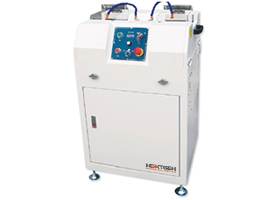 Grinding and PolishingGenGrind Belt BF – Floor-Standing Dual-Stage Belt GrinderGenGrind Belt BF is a heavy-duty floor-standing dual-stage belt grinder for high-volume metallographic sample preparation. Designed for wet or dry manual grinding...View product
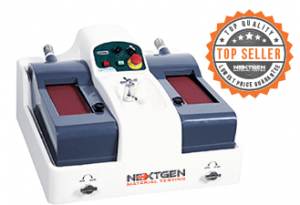 Grinding and PolishingGenGrind Belt BT – Tabletop Dual-Stage Belt GrinderGenGrind Belt BT is a dual-stage tabletop belt grinder for metallographic sample preparation where compact size and quick belt changes matter. It uses two 4 x 36...View product
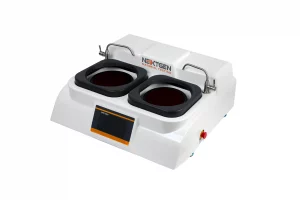 Grinding and PolishingGenGrind N Series 200S / 250S / 300S – Grinder and PolisherGenGrind N Series is a manual metallographic grinder and polisher available in 8-inch, 10-inch, and 12-inch formats, with single- or dual-wheel options. A 7-inch...View product
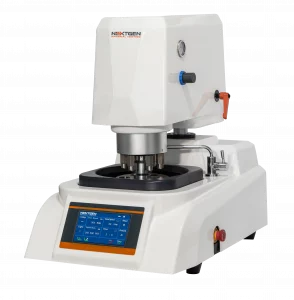 Grinding and PolishingGenGrind SA-I 250S – Semi-Automatic Grinder and Polisher (Individual Force)GenGrind SA-I 250S is a semi-automatic single-wheel grinder and polisher for metallographic sample preparation with individual pneumatic force control. It features...View product
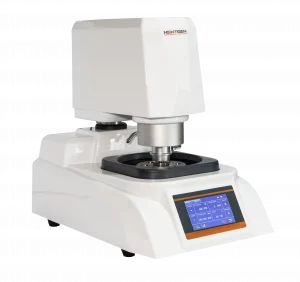 Grinding and PolishingGenGrind SA-C 250S – Semi-Automatic Grinder and Polisher (Central Force)GenGrind SA-C 250S is a semi-automatic metallographic grinder and polisher for repeatable sample preparation with central pneumatic force control. Its 250 mm...View product
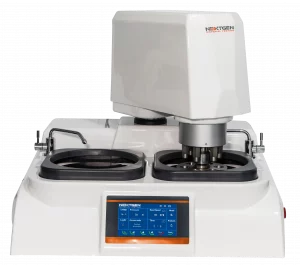 Grinding and PolishingGenGrind FA-IC 250D – Fully Automatic Dual-Wheel Grinder and PolisherGenGrind FA-IC 250D is a fully automatic dual-wheel metallographic grinder and polisher designed for higher-throughput sample preparation. With two 10-inch working...View product
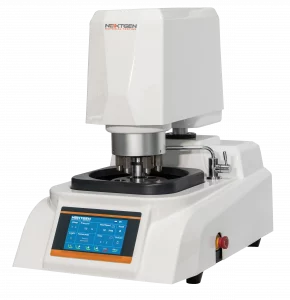 Grinding and PolishingGenGrind FA-IC 250S – Fully Automatic Single-Wheel Grinder and PolisherGenGrind FA-IC 250S is a fully automatic single-wheel grinder and polisher for repeatable metallographic sample preparation. Its 10-inch working plate, 100–1400 rpm...View product
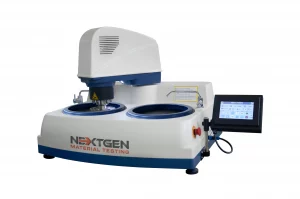 Grinding and PolishingGenGrind FA-IC – Fully Automatic Dual-Wheel Grinder and PolisherGenGrind FA-IC Dual Wheel Fully Automatic is a metallographic grinder and polisher built to automate sample preparation with high consistency and reduced manual...View product
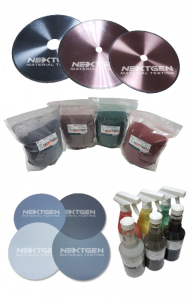 Grinding and PolishingMetallography ConsumablesMetallography consumables cover the materials needed for sectioning, mounting, grinding, polishing, etching, and cleaning specimens before microscopic examination....View product